How Long Does It Take to Stop Hair Fall Once You Know the Cause?
If you’ve been dealing with hair fall and feel like you’re doing everything right but still finding clumps in the shower drain, here’s the thing: hair problems don’t all come from the same place, and treating the wrong cause is why most people stay stuck for months.
This post breaks it all down by cause, so you know exactly what to expect and what to actually do. No vague “be patient, it takes time” energy. Real timelines.
And if you haven’t figured out your root cause yet… ➡️ go take the free hair fall quiz here first. It will make everything in this post click instantly.
Quick Reality Check Before We Start
Hair has a growth cycle of roughly 3 to 6 months. But as we’ll see, it varies a lot depending on the cause.
The good news is that you can usually tell things are improving within 4 to 8 weeks because the shedding slows down before the regrowth starts. That’s your first green flag.
And if you want to accelerate that growth, make sure to read these tips for FAST hair growth.
Now let’s get into each cause.
Iron Deficiency: The Most Common Culprit Nobody Catches
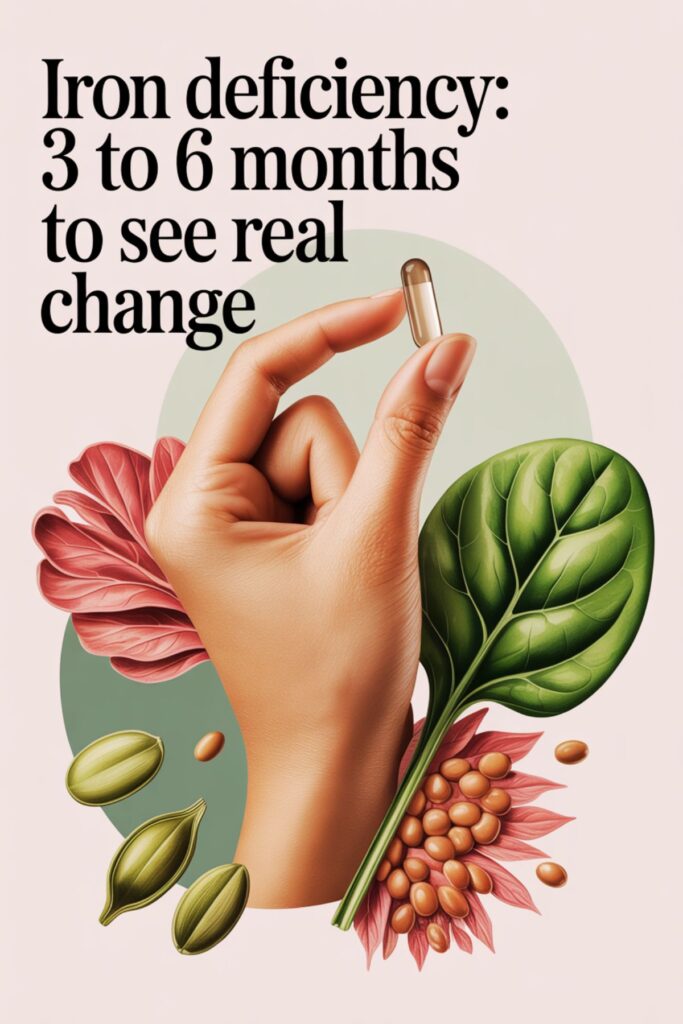
Timeline: 3 to 6 months to see significant improvement
You know, this is actually the reason why my hair falls out. I had already suspected it recently when I read that iron could be a reason, and the quiz confirmed it. Now I’m taking iron every afternoon with a glass of water with lemon (vitamin C helps absorb iron better). And I’m already starting to gradually see the results.
Iron deficiency is actually behind a shocking amount of hair fall in women.
The frustrating part is that your doctor might tell you your levels are “normal” while you’re still shedding like crazy. Here’s why: your ferritin (stored iron) can be low even when your hemoglobin looks fine, and ferritin is what your hair follicles actually run on.
What to do right now:
- Ask your doctor specifically for a ferritin test, not just a general iron panel
- If your ferritin is below 70 ng/mL, that’s worth addressing even if you’re told you’re “fine”
- Take an iron supplement with vitamin C to boost absorption (iron supplements with vitamin C on Amazon)
- Eat iron-rich foods daily: lentils, spinach, tofu, pumpkin seeds, fortified cereals
The shedding usually starts slowing around weeks 6 to 8. Full regrowth takes closer to 4 to 6 months. This one requires patience, but once you get your ferritin up, the difference is real.
Vitamin D Deficiency: The Silent Hair Thief
Timeline: 2 to 4 months to notice improvement
Vitamin D plays a direct role in waking up your hair follicles. When your levels drop, follicles go dormant. Dormant follicles don’t grow hair. It really is that simple, and it’s one of the most overlooked hair care tips out there.
What to do:
- Get your levels tested (you want to be above 40 ng/mL ideally)
- Supplement with vitamin D3 + K2 for better absorption (vitamin D3 K2 supplements on Amazon)
- Spend 15 to 20 minutes in sunlight daily if you can, even just a walk counts
- Add vitamin D-rich foods: mushrooms, fortified plant milks
You might start noticing less shedding within 6 to 8 weeks, with visible regrowth closer to the 3 to 4 month mark. This one actually responds faster than iron once you start supplementing, which feels very satisfying.
Stress: The One That Sneaks Up on You Months Later
Timeline: 3 to 6 months after stress levels decrease
Here’s what makes stress-related hair fall so sneaky and honestly so unfair: it doesn’t happen while you’re stressed.
It happens 2 to 3 months after a hard period. This is called telogen effluvium, and it tricks so many women into thinking something is suddenly, mysteriously wrong when actually their body is just catching up on that rough patch from last winter.
The shedding will slow down on its own once your body settles, but you can speed things up.
What to actually do:
- Start a daily 10-minute yoga nidra session. This YouTube video by Jennifer Piercy is genuinely one of the best for resetting your nervous system
- Take ashwagandha; it’s clinically studied for cortisol reduction (find ashwagandha capsules on Amazon)
- Add magnesium glycinate at night; it’s calming and most of us are deficient (check out magnesium glycinate on Amazon)
- Be gentle with your scalp in the meantime: no tight hairstyles, no heat, nothing that adds more stress to your follicles
Stress hair fall is one where, once your body catches up, the regrowth is actually really good. You just have to ride out the lag time without panicking, which is easier said than done, but you’ve got this.
Biotin and Zinc: The Duo That Speeds Everything Up
Timeline: 6 to 10 weeks for noticeable change
Biotin and zinc are two of the most researched nutrients for hair health, and they work better together than apart.
Zinc supports follicle structure and oil regulation; biotin supports the keratin production that actually builds each hair strand. Think of them as the construction crew for your hair.
What to do:
- Look for a hair-specific supplement that combines both (biotin and zinc hair supplements on Amazon)
- Food sources for zinc: pumpkin seeds, hemp seeds, chickpeas, cashews
- Food sources for biotin: sweet potato, almonds, sunflower seeds
- Don’t mega-dose biotin beyond 5,000 mcg; it can mess with thyroid test results if you need bloodwork done
Six weeks is usually when people start noticing their shower drain is… less dramatic. That’s the sign you’re on the right track.
Protein Deficiency: Your Hair Is Literally Made of This Stuff
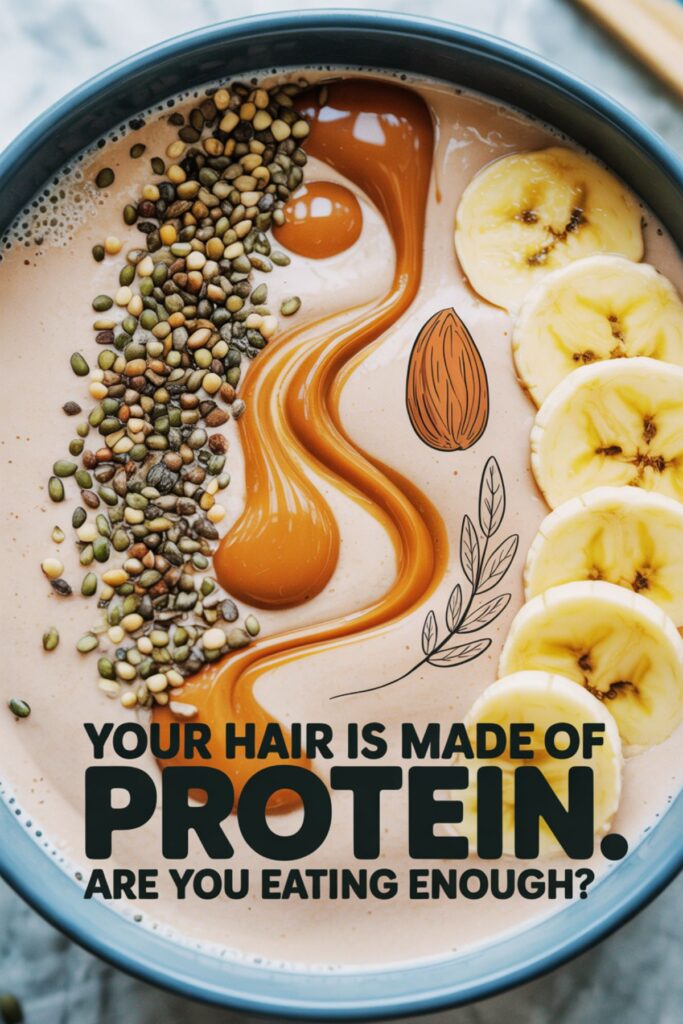
Timeline: 2 to 3 months
Your hair is almost entirely made of protein. So when you’re not eating enough of it, your body makes a decision: keep your heart pumping and your organs running, or grow your hair. Spoiler: hair always loses that argument.
This is especially common if you’ve recently gone plant-based without really planning your protein intake, or if you’ve been under-eating in general.
Signs this might be you: your hair feels weak, snaps easily, looks dull even right after washing.
Quick hairfall remedies at home for this one:
- Aim for at least 0.8g of protein per kg of body weight daily (1g or more if you’re active)
- Add a plant-based protein powder to smoothies if you’re struggling to hit your intake (plant protein powders on Amazon)
- Make this your new go-to breakfast: Greek yogurt (or coconut yogurt for dairy-free) + hemp seeds + almond butter + banana. That’s roughly 20g of protein before 9 AM and it tastes good, which matters.
Protein deficiency hair fall responds relatively fast once you fix your intake. Two to three months and you’ll see real change.
Thyroid Imbalance: This One Needs a Doctor in Your Corner
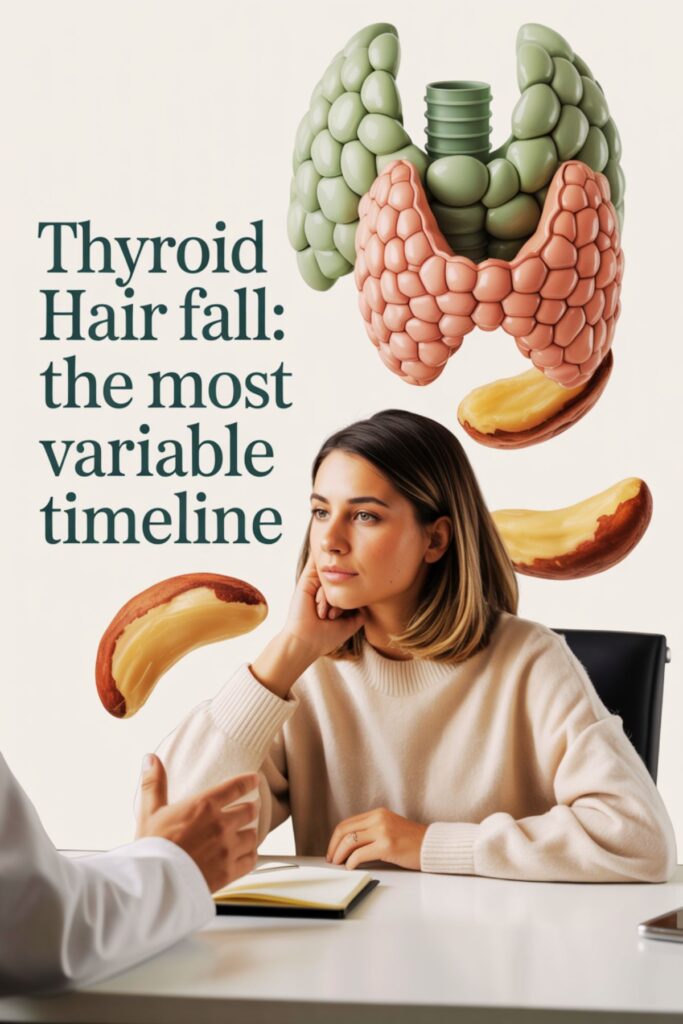
Timeline: 3 to 12 months depending on treatment
Both an underactive and overactive thyroid can cause hair fall because thyroid hormones directly regulate the hair growth cycle.
When they’re off, the whole system gets disrupted. This isn’t a scary thing; it’s actually one of the more treatable causes once you know it’s happening.
What you should do:
- Get a full thyroid panel: TSH, free T3, free T4, and thyroid antibodies (the antibodies check for Hashimoto’s, which is more common than most people realize)
- If you’re already on thyroid medication, know that it can take 3 to 6 months after your levels stabilize before hair fall slows down; that lag is normal
- While you’re managing this, support your thyroid nutritionally with selenium-rich foods: 2 Brazil nuts a day is genuinely enough, plus sunflower seeds and eggs
- Avoid eating huge amounts of raw cruciferous veggies if you have hypothyroidism; lightly cooked is totally fine
The timeline here is the most variable on this list, but the hair typically comes back well once your levels are managed. This one’s a marathon, not a sprint.
Hormonal Imbalance: PCOS, Post-Pill, and Postpartum

Timeline: 4 to 12 months
Hormonal hair fall hits differently because it feels so personal.
Whether it’s PCOS, coming off birth control, postpartum shedding, or perimenopause, the root issue is often the same: androgens (specifically DHT) shrinking your hair follicles over time. Your hair thins, your part gets wider, and nobody warned you this was coming.
This one takes a multi-pronged approach because you’re working against an active hormonal driver, not just a deficiency.
What helps:
- Spearmint tea twice daily has actual research behind it for reducing androgens. Steep 1 tsp of dried spearmint in hot water for 5 minutes. Drink it like it’s your new ritual.
- Try saw palmetto, which blocks DHT naturally (saw palmetto supplements on Amazon)
- Myo-inositol is one of the most studied supplements for PCOS-related hair fall specifically (myo-inositol supplements on Amazon)
- For postpartum shedding: this is mostly your body normalizing after birth, and while it feels alarming (like, genuinely alarming), it usually resolves within 6 to 9 months. Supporting with protein and iron speeds recovery significantly.
This category requires the most patience on this list, but the results are very real.
Heat Damage and Over-Styling: The One You Can Fix This Week
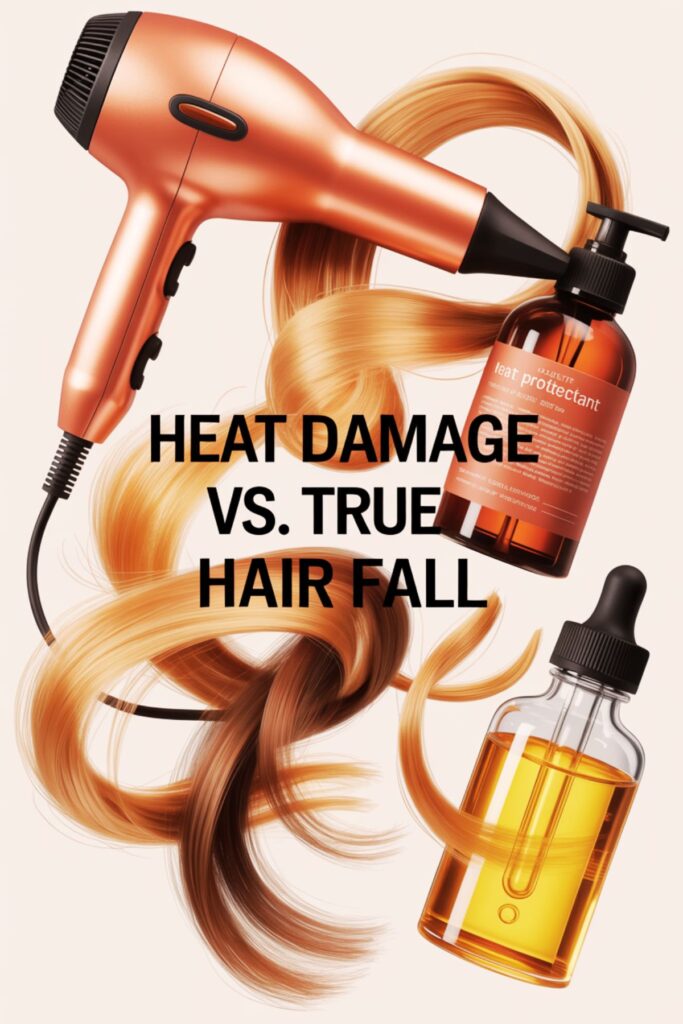
Timeline: 4 to 8 weeks to stop breakage; 3 to 6 months to regrow
Blow drying on high heat, flat ironing every day, skipping heat protectant — these don’t just fry the hair you already have.
Over time they weaken your follicles and cause breakage that looks exactly like hair fall but is actually something different.
Here’s how to tell the difference: look at the hair that’s falling out. If there’s no white bulb at the end, it snapped mid-shaft. That’s breakage from damage. If there is a little white bulb, that’s true hair fall from the root.
What to fix right now:
- Switch your blow dryer to medium heat and keep it moving constantly; never hold it in one spot for more than 2 seconds
- Use a heat protectant every single time, no exceptions (heat protectant sprays on Amazon)
- Try this DIY hair care treatment before washing: 2 tablespoons of coconut oil + 5 drops of argan oil, massaged into your hair 30 minutes before shampooing. Do it twice a week.
- Air dry when you can, even just getting to 80% dry before touching a heat tool makes a huge difference
This is one of the fastest-improving causes because once you stop the damage, your hair bounces back quickly. Small changes, fast results.
Seasonal and Weather-Related Hair Fall: Yes, It’s a Real Thing
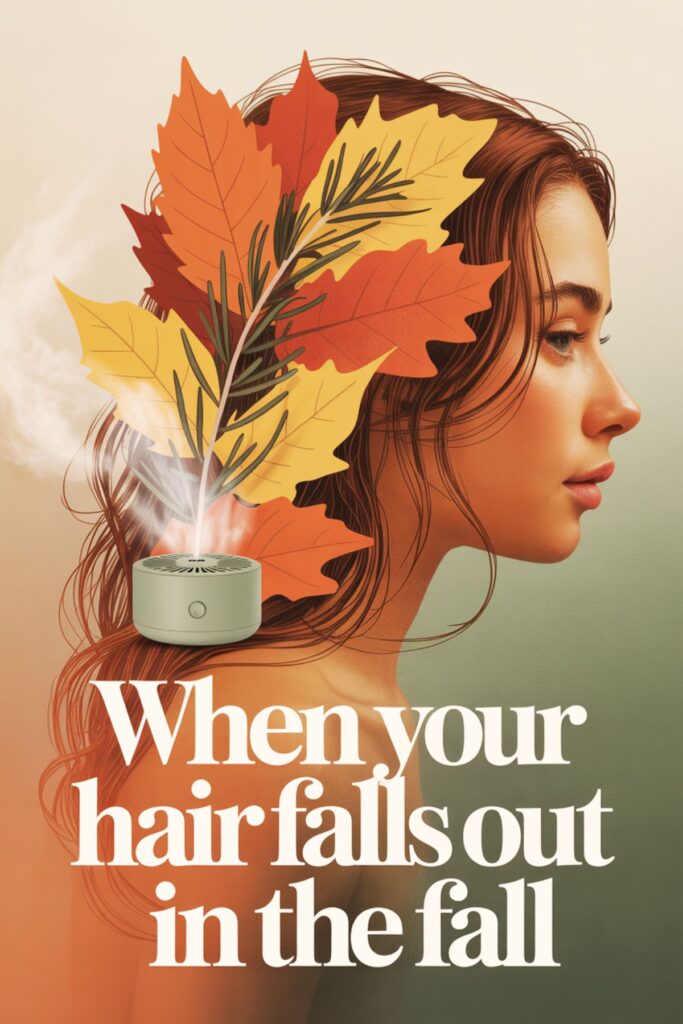
Timeline: 6 to 10 weeks, self-resolving
Most people don’t know that hair fall naturally spikes in fall (September through November) and sometimes spring. It’s tied to the shift in daylight hours affecting your hair’s growth cycle, similar to how animals shed with the seasons.
Add in dry winter air stripping moisture from your scalp, and suddenly your drain looks like a small animal every shower.
The good news: seasonal hair fall stops on its own. But you can absolutely keep it from getting worse.
What to do during high-shed seasons:
- Cut back on washing to every 2 to 3 days to let your scalp’s natural oils do their job
- Do a scalp oil massage 2 to 3 times a week: mix 4 drops of rosemary essential oil into 1 tablespoon of jojoba oil, massage in for 5 minutes, leave on for 30 minutes, then wash out. Rosemary oil has real research behind it for hair growth (you can get rosemary essential oil here)
- Use a humidifier indoors during winter; your scalp will thank you
- Switch to a sulfate-free moisturizing shampoo for the colder months
The Real Timeline Cheat Sheet
Just to put it all in one place:
- Heat damage and breakage: 4 to 8 weeks to stop; 3 to 6 months to regrow
- Seasonal hair fall: 6 to 10 weeks, self-resolving
- Biotin and zinc: 6 to 10 weeks
- Protein deficiency: 2 to 3 months
- Vitamin D: 2 to 4 months
- Stress (telogen effluvium): 3 to 6 months after stress resolves
- Iron deficiency: 3 to 6 months
- Hormonal imbalance: 4 to 12 months
- Thyroid: 3 to 12 months depending on treatment
The most important hair fall control tip on this entire list is to stop guessing. Treating the wrong cause doesn’t just waste time; it keeps you stuck in a loop of trying things that don’t work for your specific situation.
The Food-for-Healthy-Hair Cheat Code Most People Skip
No matter what your cause is, what you eat either speeds up or slows down your recovery. Here’s a simple daily breakdown for hair fall control from the inside out:
- Morning: a big scoop of hemp seeds in a smoothie (protein + biotin + zinc in one go)
- Lunch: lentils or chickpeas somewhere on your plate; a big salad with pumpkin seeds on top
- Snack: a small handful of cashews + 2 Brazil nuts (zinc + selenium, done)
- Dinner: tofu or legumes as your main protein; pile on the leafy greens
This is genuinely one of the best natural hair care habits you can build because you’re literally feeding your follicles. Healthy hair starts way before it ever leaves your scalp.
If you want to understand what your hair might also be signaling about your overall health, this post breaks it all down in a way that’s kind of eye-opening.
More Hair Problems Stuff
Still figuring out your situation? These two posts are worth your time:
- Why Is Your Hair Falling Out? Take This Free Quiz to Find Out
- Hair Growth Tips That Actually Work: How to Grow Hair Fast (and Keep It)
- 8 Hair Problems Your Body Is Using to Send You a Message
Save this pin!