8 Hair Problems Your Body Is Using to Send You a Message
Real talk: you’ve probably spent money on serums, supplements, and that overpriced shampoo your favorite influencer swears by, but you might be missing the most obvious signs of unhealthy hair and hair problems hiding in plain sight.
Your body hair has been giving you free health intel this whole time, and most of us are just not reading it.
This post is your no-fluff guide to decoding exactly what your hair is telling you about your health, and what to actually do about it today.
Once you discover the cause of your hair loss and start to fix it, follow these tips to grow your hair FAST and have beautiful healthy hair again.
1. You’re Noticing Serious Hair Fall Out of Nowhere
The kind “my ponytail is half the size it was six months ago”.
This is a big deal, and it usually points to some deficiency in your body.
➡️Take this free quiz to find out what kind of deficiency is making you lose your hair.
Hair follicles are among the fastest-growing cells in your body, which means they’re also the first to get cut off when your body decides resources need to go elsewhere (like, you know, your heart and brain).
This kind of hair fall is one of the most common hair concerns women bring up to their doctors, and it’s almost never “just stress.”
What to actually do: Get a blood panel. Some things to ask for are ferritin (not just iron), TSH (thyroid), and vitamin D. These are some of the most commonly missed culprits behind hair fall. Don’t let a doctor say “your levels look normal” without seeing the actual numbers; ferritin under 30 ng/mL can cause serious hair fall even when it’s technically “in range.”
Would you like to know how long it will take until your hair stops falling once you start treating the cause? Check out this post about how long until your hairfall stops (by cause).
2. Your Hair Strands Are Getting Thinner
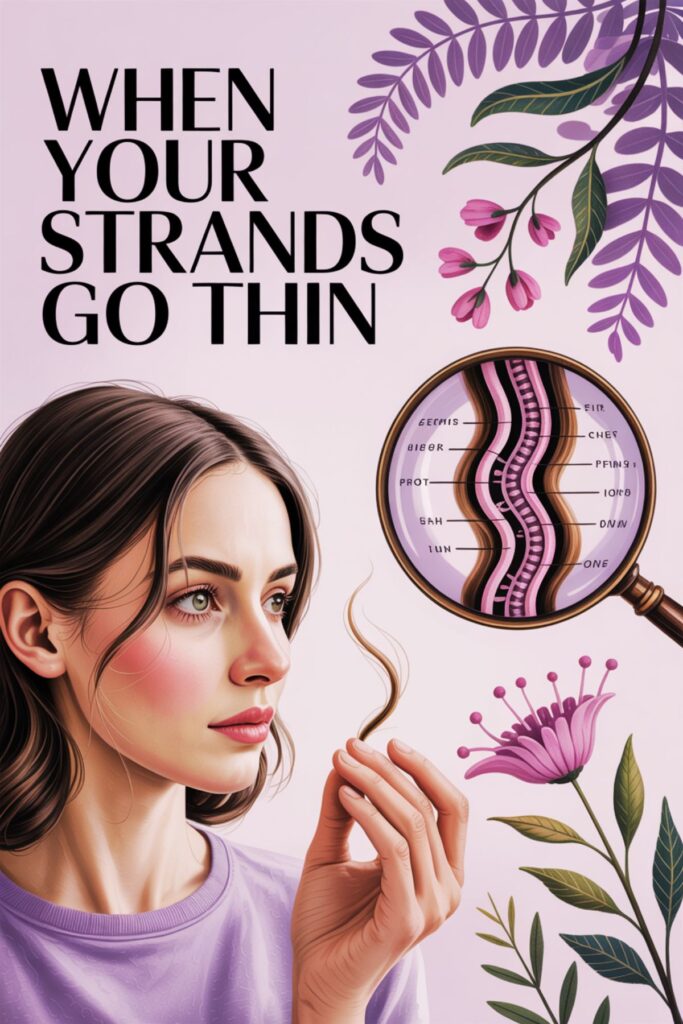
This is different from hair fall. Hair fall is strands coming out. Thinning hair is when the individual strands themselves shrink in diameter and start to feel like baby hair or barely-there fuzz.
You might have a full head of hair but it suddenly has zero volume, zero body, and looks weirdly flat no matter what you do.
Thinning hair is often hormonal, particularly linked to declining estrogen (hello, perimenopause, even in your 30s), or it can be a sign of a slow-developing nutritional deficiency.
Weak hair that’s lost its thickness is also a classic sign that your protein intake is too low. Hair is literally made of keratin, which is a protein. If you’re undereating protein, your body will sacrifice your hair strand thickness before it sacrifices anything else.
What to try: Aim for at least 0.7g of protein per pound of bodyweight daily. Add a plant-based protein powder to your smoothies if you’re struggling to hit that. Give it six to eight weeks; hair changes are slow, but they do happen.
3. Dry Hair That Feels Like Straw
You didn’t change your products. You’re not heat-styling more than usual. But your hair feels dry, brittle, and like it might snap if you look at it wrong.
Dry hair and hair breakage that appeared suddenly (not gradually over years) is a classic signal of hypothyroidism or an essential fatty acid deficiency.
Your thyroid regulates basically everything about how your cells function, including how much moisture your hair shaft retains. Dry, damaged hair that won’t respond to any hair care is your body waving a red flag, not a product problem.
One of the best diy hair care moves for dry hair is actually internal: add one tablespoon of ground flaxseed to your morning smoothie or oatmeal every single day for three weeks. It’s rich in omega-3s and takes 60 seconds. Then reassess. If there’s zero improvement, it’s time to check your thyroid hormones (TSH, T3, T4).
Here’s a dry hair support smoothie that actually works: blend 1 cup unsweetened oat milk, 1 frozen banana, 1 tbsp ground flaxseed, 1 tsp honey, and a handful of spinach. Down it every morning for three weeks and notice the difference.
4. Random Facial or Body Hair You’ve Never Had Before
We’re talking chin hairs that appeared this year, or suddenly noticing dark hair on your stomach or upper lip when that was never your thing.
This is called hirsutism and it’s driven by androgens (testosterone-adjacent hormones) being elevated.
The most common cause in women is Polycystic Ovary Syndrome (PCOS), but it can also be linked to adrenal issues or certain medications. This isn’t a hair care problem; it’s a hormone problem, and treating it topically is a waste of time and money.
Book an appointment with your OB-GYN or an endocrinologist and ask for an androgen panel. PCOS is very manageable when caught early, but it does affect fertility, blood sugar, and mood if left unchecked. Catch it now.
5. Your Eyebrows Are Disappearing at the Outer Edges
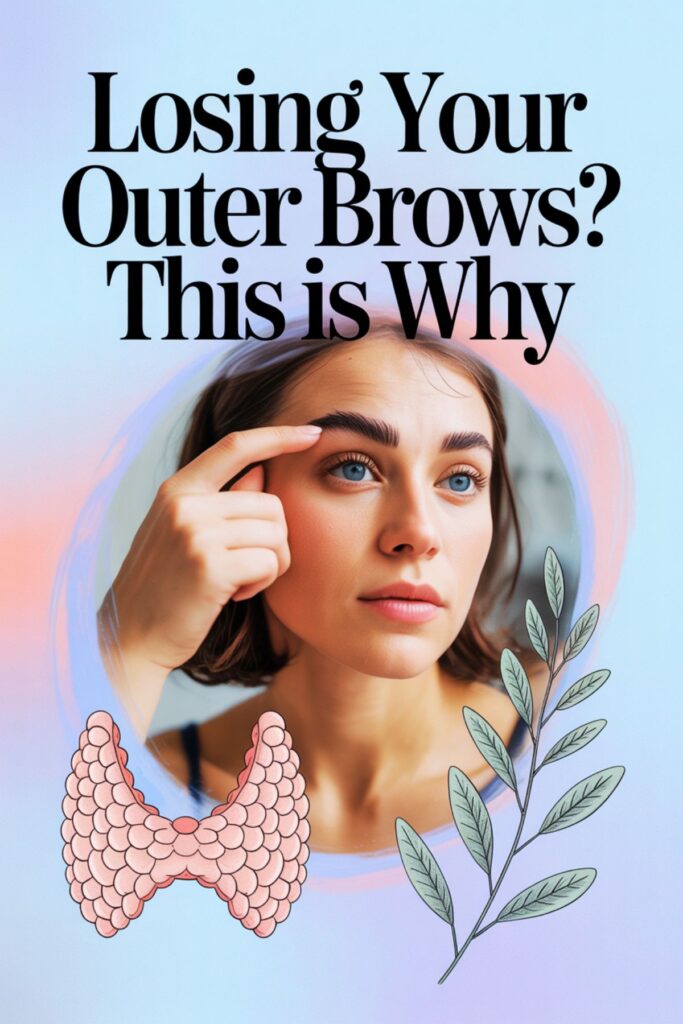
Look in the mirror right now. Are the outer thirds of your eyebrows sparse, patchy, or basically gone? Not overplucked-in-2003 sparse. Actually missing.
This is one of the most specific and most ignored hair concerns on this list. Loss at the outer brow is a textbook early sign of hypothyroidism.
The thyroid controls hair growth cycles everywhere on your body, and the outer brow is one of the first places unhealthy hair patterns show up when your thyroid is underperforming.
Screenshot this section and mention the outer brow thinning specifically to your doctor, because many will brush it off as aging. It is not always aging. Push for a full thyroid panel (TSH, free T3, free T4, and thyroid antibodies).
6. Your Hair Is Growing Unusually Fast
Fast hair growth sounds like a dream, right? Not always. Unusually rapid hair growth can show up during pregnancy, but it can also be a sign of hyperthyroidism, which speeds up your entire metabolic rate, hair growth included.
Other signs of hyperthyroidism to watch for alongside fast hair growth: heart palpitations, anxiety that came out of nowhere, unexplained weight loss, and feeling hot all the time.
If you’re checking three or more boxes, get your thyroid checked. Healthy hair grows at a steady, consistent pace; dramatic spikes in growth rate are worth flagging.
7. Your Leg or Arm Hair Stopped Growing
Before you celebrate barely having to shave anymore, patchy or significantly reduced hair growth on your legs can signal poor circulation. When blood flow is compromised, the hair follicles on your extremities are often the first to be affected.
If you also notice cold feet, leg cramping when walking, or skin that looks shiny and tight on your lower legs, mention it to your doctor.
They’ll check your circulation with a simple ankle-brachial index test. No natural hair care routine in the world fixes a circulation issue, so this one genuinely needs medical attention.
8. Your Hair Has Weird Texture Changes in Specific Sections
You know how your hair just has “a texture”? Well, if you start noticing sections that are coarser, thinner, or a completely different curl pattern than the rest, your hair is basically keeping a diary of your health.
Think of it like tree rings: each section records what was happening in your body at the time it was growing.
Biotin deficiency, zinc deficiency, and extreme stress events (yes, including emotional ones) can all show up as texture shifts in your hair shaft months after the fact. This is one of those hair care ideas most people skip because they assume texture is genetic and permanent. It’s often neither.
The supplement stack worth trying (always check with your doctor first):
- Zinc supplement: linked to hair follicle regulation and reducing hair fall
- Biotin gummies: especially if your diet is low in eggs or nuts
- Algae-based omega-3 supplement: one of the best natural hair care moves for dry hair from the inside
Your Body Is Not Being Subtle. You Just Weren’t Looking.
Your hair is a living health log. Every strand has a story about what your hormones, nutrients, and stress levels were doing in the last few months. Hair fall means something. Dry hair means something. Thinning hair means something. Texture changes mean something.
You don’t have to obsess over your hair care routine to pay attention to these signals. Just start noticing. And when something shifts, treat it as information, not a cosmetic inconvenience.
Your body has been sending you memos. It’s time to start reading them.
More Hair Problems Stuff
Not sure where to start with your hair concerns? These posts break it all down for you.
- Why Is Your Hair Falling Out? Take This Free Quiz to Find Out
- Hair Growth Tips That Actually Work: How to Grow Hair Fast (and Keep It)
- How Long Does It Take to Stop Hair Fall Once You Know the Cause?
Save this pin!
A note: This post is for informational purposes only and is not a substitute for professional medical advice. Always consult your doctor or healthcare provider for diagnosis and treatment.