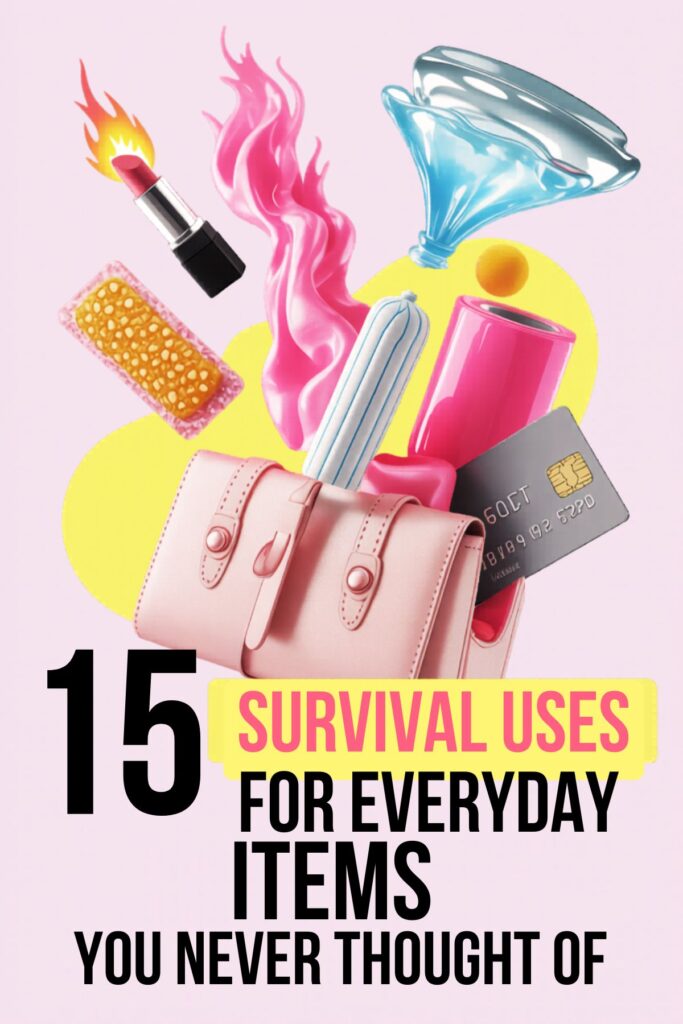
15 Survival Items Already in Your Bag That Could Save Your Life
You’re probably not in an emergency right now, and hopefully you won’t be anytime soon. But here’s the thing about survival life hacks and survival items: reading about them today, when you’re safe and calm, is exactly when your brain locks them in.
So that one day, if something goes sideways, something clicks. A lightbulb fires. And you actually know what to do.
The wild part? You don’t need a full survival kit strapped to your back. The everyday stuff sitting at the bottom of your bag right now is already more powerful than you think.
Here’s what you’ve got, why it matters, and a few things worth tossing in starting today.
1. Dental Floss: The Most Underrated Survival Tool You’re Already Carrying
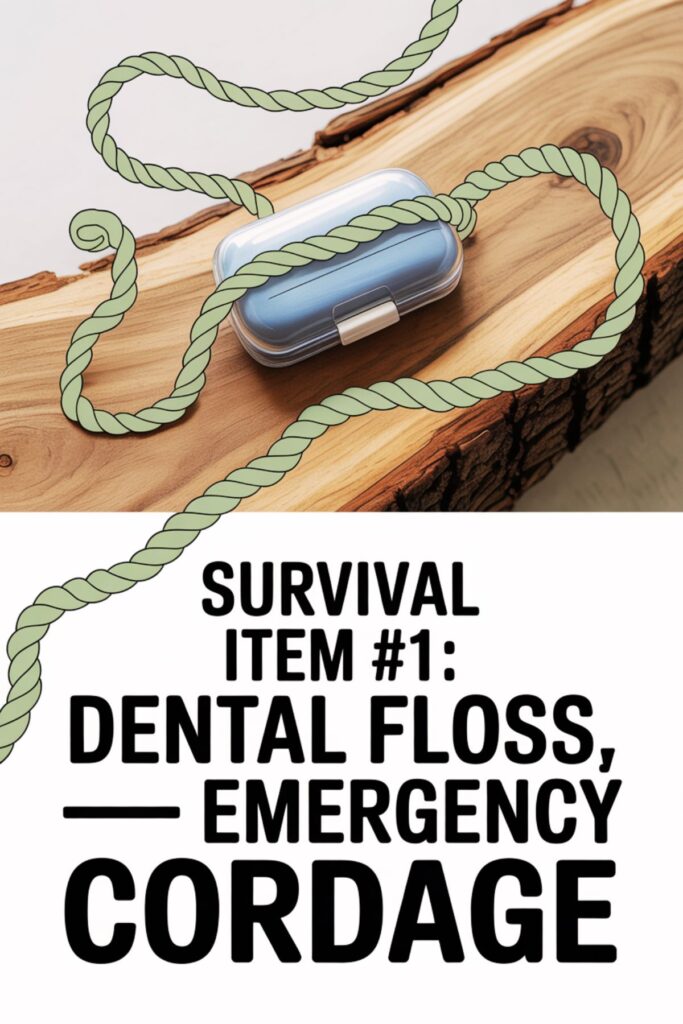
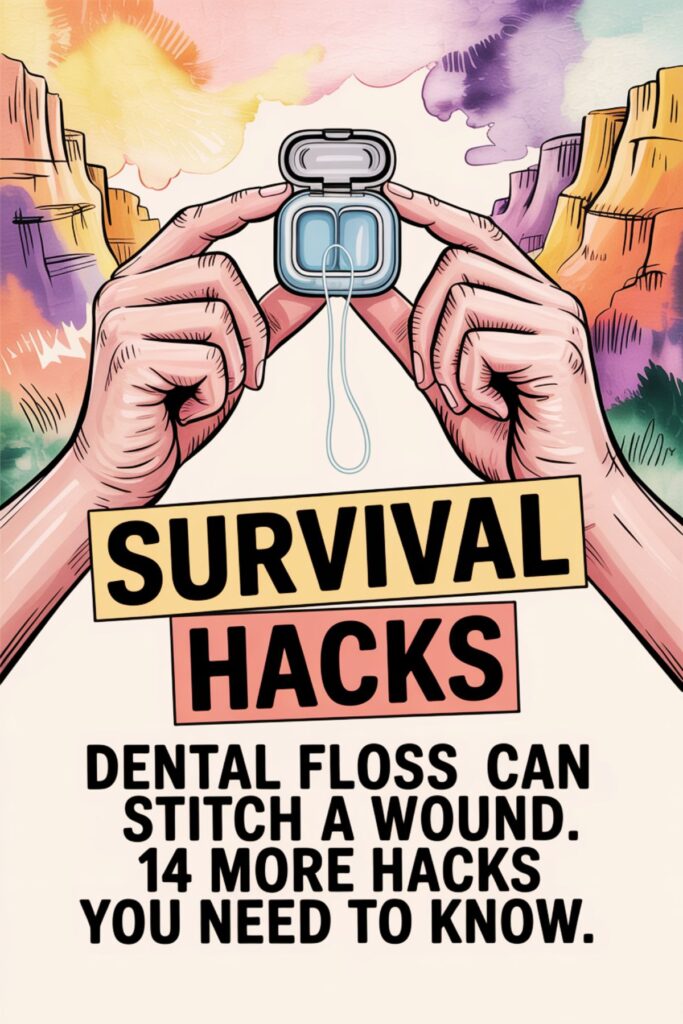
Unflavored waxed dental floss is one of the most versatile survival items on this list, and almost no one talks about it. A single travel pack holds roughly 10 meters of cord that is stronger than it looks. Use it to:
- Lash branches together for an emergency shelter frame
- Set a basic snare trap for small animals if you’re in the wild and need food
- Stitch a wound closed as a last resort (use a sterilized needle or safety pin)
- Hang clothing or a bright item high up as a signal flag for rescuers
- Tie a tourniquet or reinforce a splint
If you don’t already carry a travel floss pack in your bag, add one today. It weighs nothing and costs under a dollar.
2. A Mylar Snack Wrapper: Your Accidental Signal Mirror
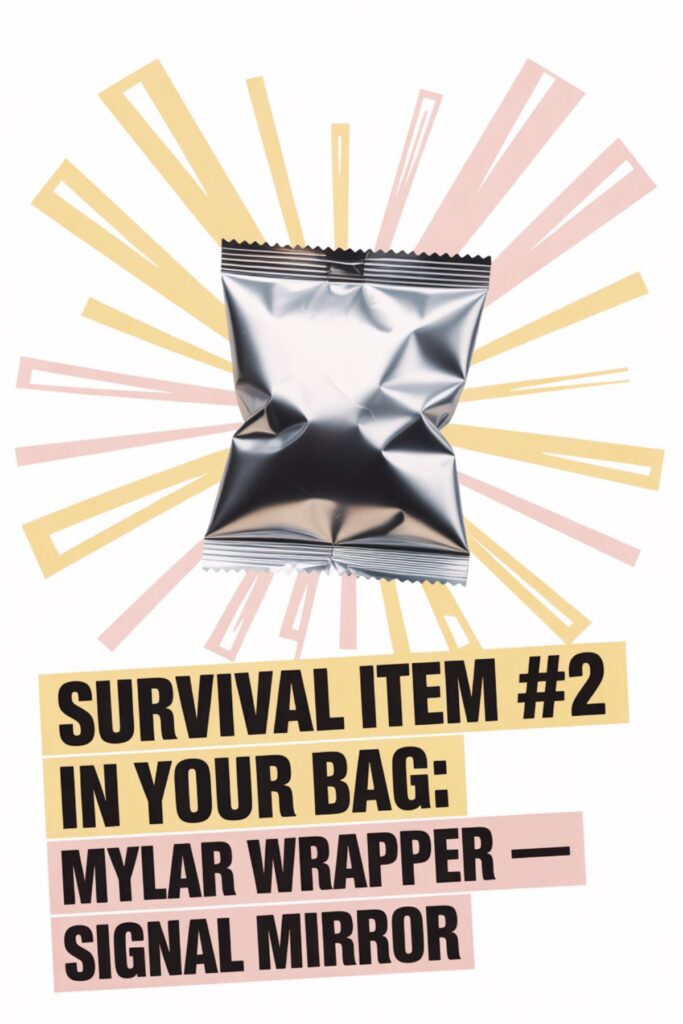
That empty chip bag or protein bar wrapper at the bottom of your bag? The inside is a mirror. In direct sunlight, the reflective inner surface of a mylar snack wrapper can be seen from miles away by a passing aircraft or vehicle.
Angle it toward the light source and flash it in the direction you want to signal. Three flashes is the universal distress signal.
This same principle applies to an emergency mylar blanket, which folds to the size of a credit card and is worth keeping in any everyday survival bag.
3. A Straw (From Your Last Coffee or Smoothie)
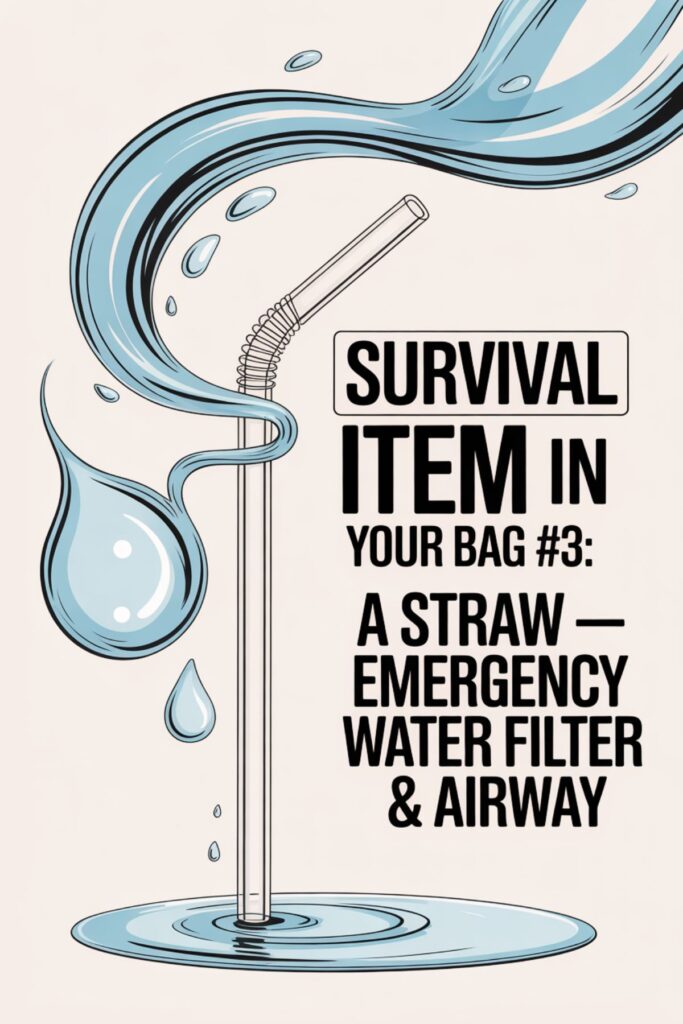
Most people toss it. Don’t. A plastic straw has two genuinely useful emergency functions that almost nobody includes in survival tips lists.
First: it’s a prefilter for murky water. Push it through a piece of cloth or your tampon cotton (more on that below) to draw up water from a puddle without putting your mouth directly on the source. It won’t remove bacteria, but it removes debris before you boil or treat the water.
Second, and this one is very specific: if someone takes a hard impact to the chest and develops a tension pneumothorax (a collapsed lung with building pressure, which can happen in a serious accident), a needle chest decompression is sometimes required. In a wilderness emergency far from help, a hollow tube can be used as a vent. This is an extreme last resort taught in wilderness medicine courses, but it’s real, and a straw is the only thing in your bag that could serve that function. Keep one.
4. Your Lipstick or Lip Balm
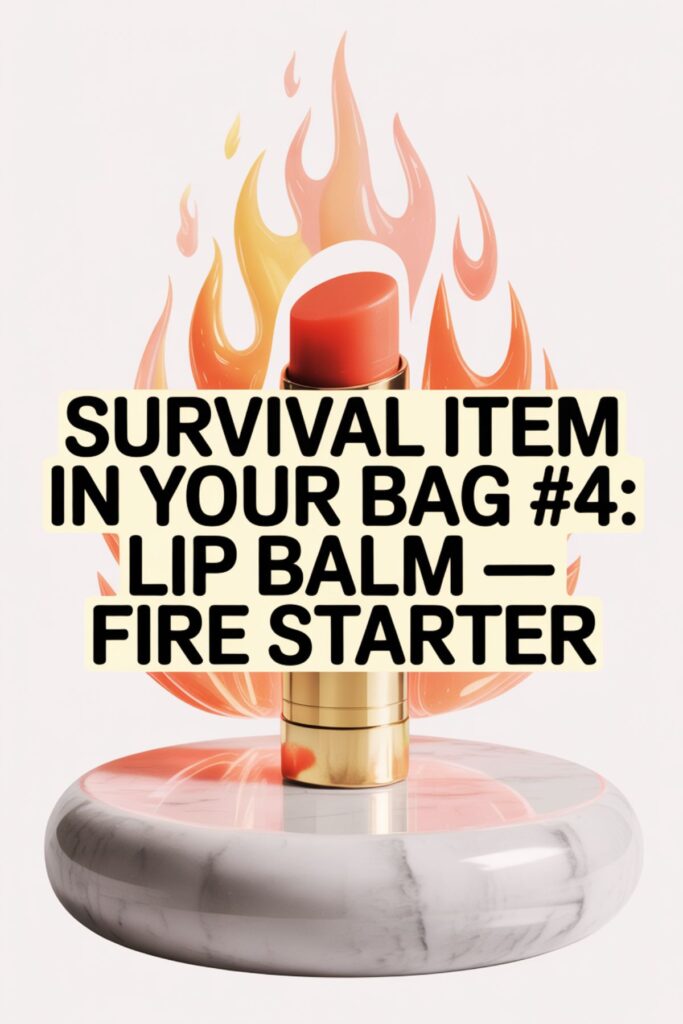
This one is one of the more surprising everyday survival hacks, and it works. A waxy lip balm or creamy lipstick is flammable. Rub it onto a dry tissue, cotton from a tampon, or a few dry leaves and it will catch a spark and burn longer than bare tinder. It buys you precious minutes of flame when you’re trying to start a fire in damp or cold conditions. Keep an unflavored wax balm like this one in your bag.
It also works on chafing, cracked skin, and minor burns as a barrier layer, which is useful in both cold weather and desert situations.
5. A Hair Tie or Rubber Band
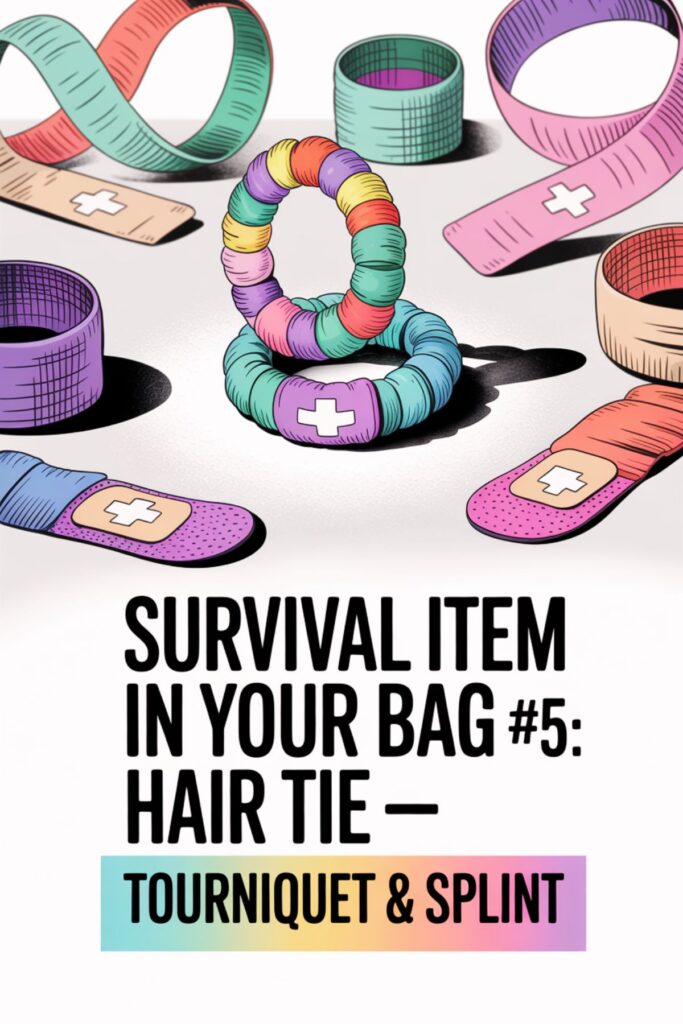
Wrap it tightly around a bleeding finger as a pressure band while you deal with a wound. Bundle sticks for a splint. Strap a broken bag strap back together. Keep a bandage in place when you have no medical tape. There are probably three of these on your wrist right now. Good. Toss two more into a side pocket and forget about them until you need them.
6. A Tampon or Pad
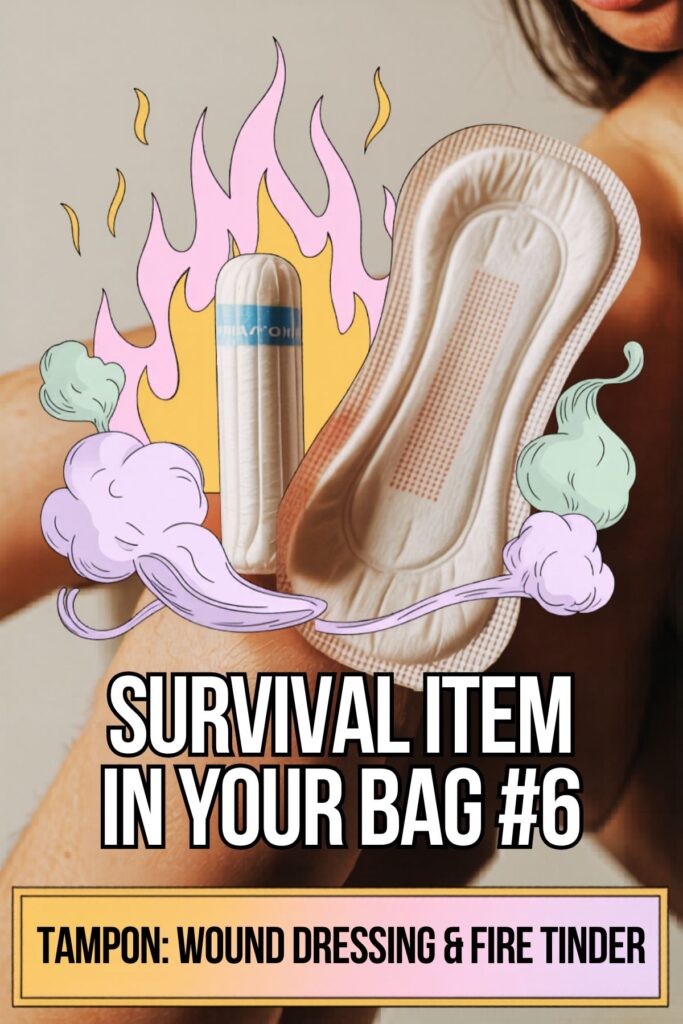
A tampon is made of compressed sterile cotton. In an emergency:
- Pack it into a deep puncture wound to slow bleeding while you wait for help; this is a real wilderness first aid technique
- Pull it apart and use the cotton as fire tinder; it catches a spark almost instantly
- Use the applicator as a makeshift straw to sip water from a small puddle without direct contact
- Soak it and use it as a debris filter before boiling water
A pad functions as a pressure bandage. Hold it firmly against a large bleeding wound and it absorbs a significant amount before you can access proper care.
7. A Bobby Pin or Hair Clip
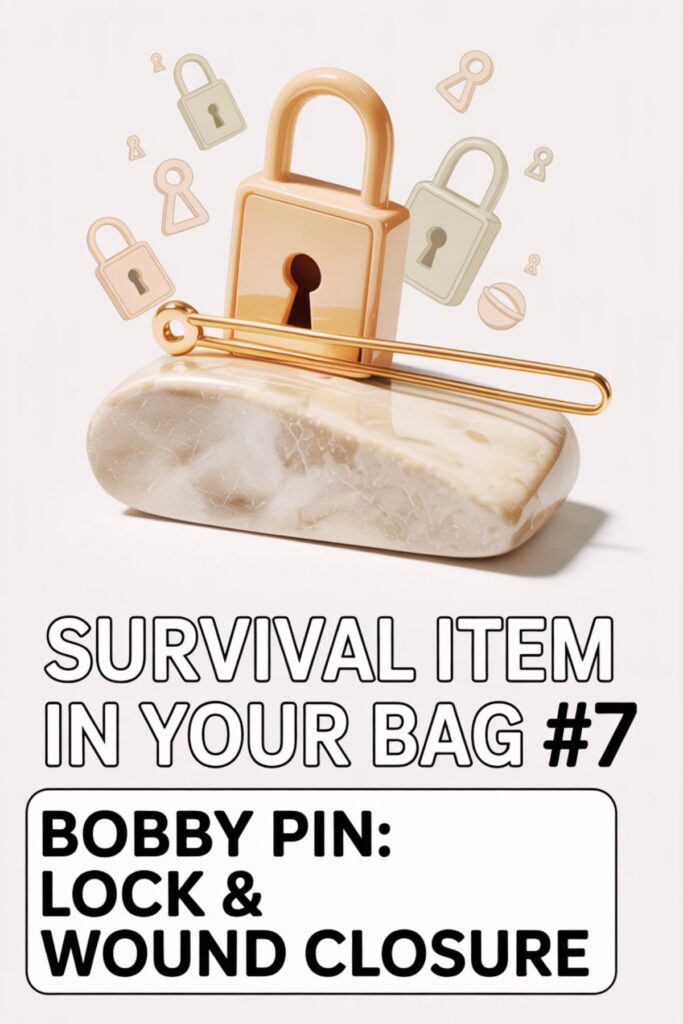
Two survival techniques in one tiny piece of metal.
First: in a real emergency, a bobby pin bent into an L-shape combined with a second one as a tension wrench can open a basic pin tumbler lock. It takes practice, but it’s a learnable skill and it’s legitimate.
Second: use it to keep wound edges together if you have no bandages, clip a torn bag closed, improvise a splint support for a finger, or in sunlight, angle the metal surface as a small signal reflector. Keep five in a tiny pouch.
8. Nail Clippers
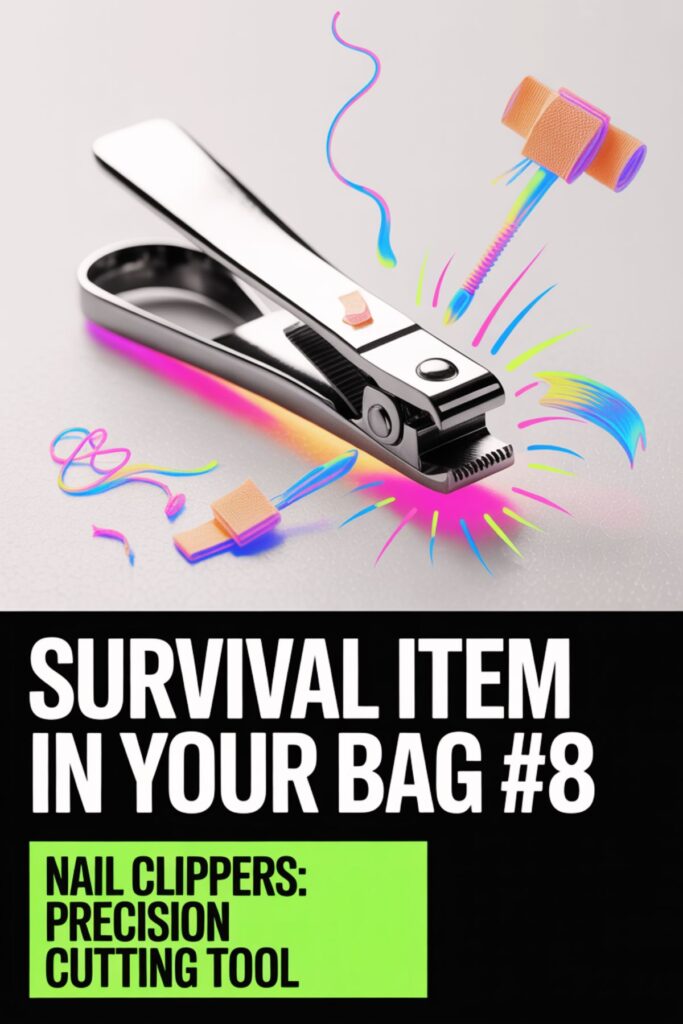
Hardly anyone puts these on survival tips lists. They should. Nail clippers can:
- Cut paracord, fishing line, or dental floss cleanly and precisely
- Remove a splinter or thorn embedded in skin (the flat edge works like a precision tool)
- Cut bandage tape or gauze to the exact size you need
- Trim and clean a ragged wound edge before dressing it
The file attachment on most nail clipper sets doubles as a small scraping or prying tool. Keep a basic travel-size pair in your bag; you’ll use them daily and they’ll earn their keep in an emergency.
9. Hand Sanitizer
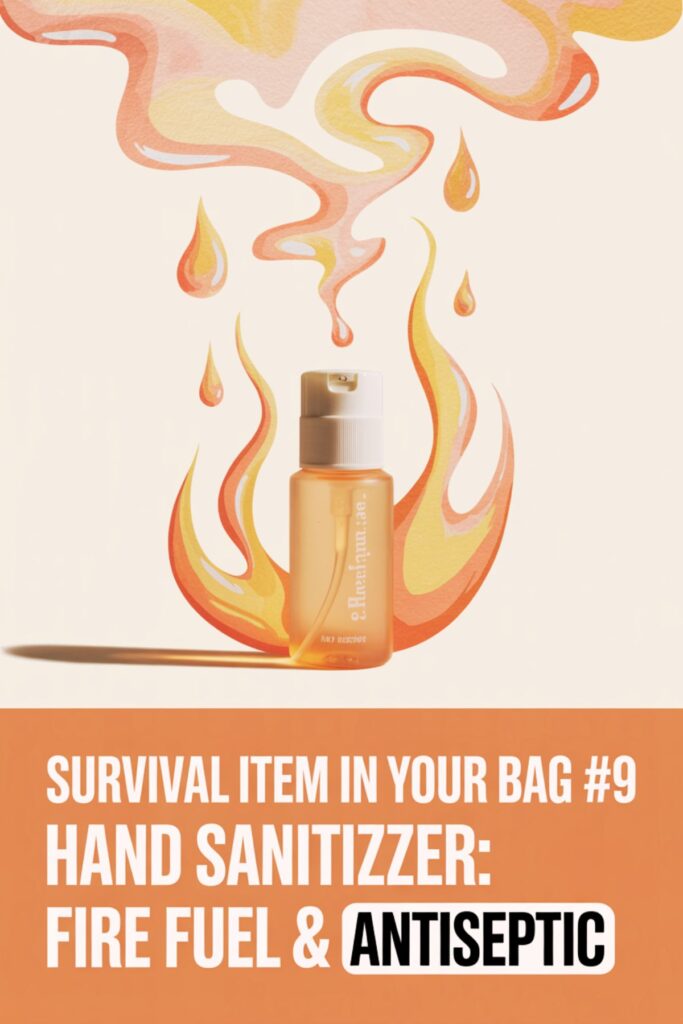
You carry it for germs. It’s also fuel. Any hand sanitizer with 60% or higher alcohol content is flammable and burns clean.
Squeeze a small amount onto dry tinder, and a single spark or match will catch it. It burns longer than bare material, which is everything when you’re working with damp wood.
It also works as an emergency wound antiseptic if you have a cut and nothing else. Keep a plain gel formula in your bag at all times.
10. A Spare Sock
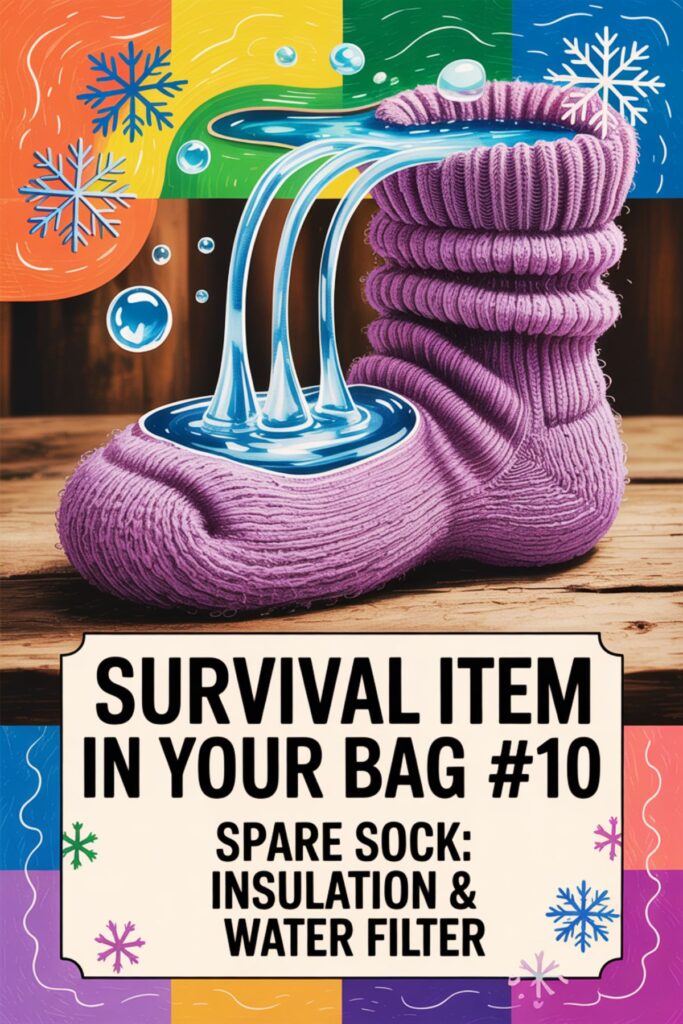
If you keep one in your bag (gym bag, travel bag, work bag), you already have a survival tool. A sock can:
- Pre-filter debris from water before boiling
- Wrap around a hand or foot as emergency insulation in cold conditions; even a thin layer matters against wind and wet
- Work as a bandage wrap around a sprained ankle or injured wrist
- Fill with sand or small rocks as an improvised self-defense tool if you’re ever in a genuinely dangerous situation
Cold weather and survival go hand in hand; if you want the full breakdown on staying alive in freezing conditions, these cold weather survival hacks cover it in detail.
11. A Solid Pen
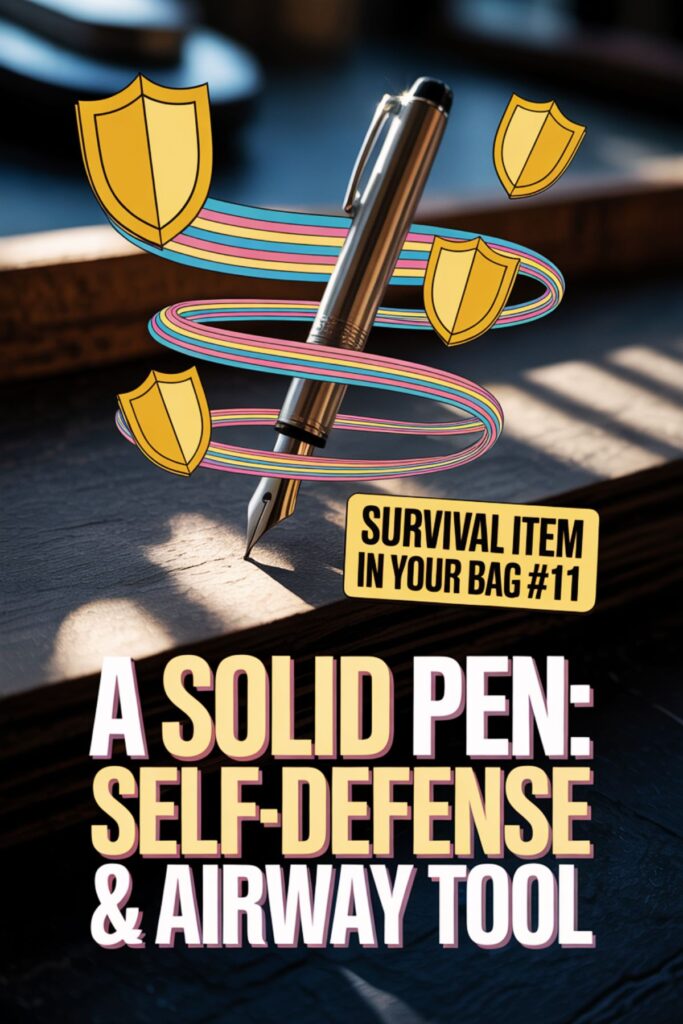
Not for writing. A metal pen held in a closed fist with the tip facing out multiplies the force of a strike significantly; it’s one of the core tools in self-defense training and a legitimate everyday survival technique.
Beyond defense, a hollow pen barrel is an emergency airway tube. In a remote situation where someone is losing their airway due to severe swelling and no help is coming, a hollow tube is a last-resort technique taught in advanced wilderness medicine. The Zebra F-701 All Metal Pen is the specific one worth carrying. Sturdy, reliable, looks completely normal, and you’ll use it every day until the one day you might really need it.
12. A Reusable Metal Water Bottle
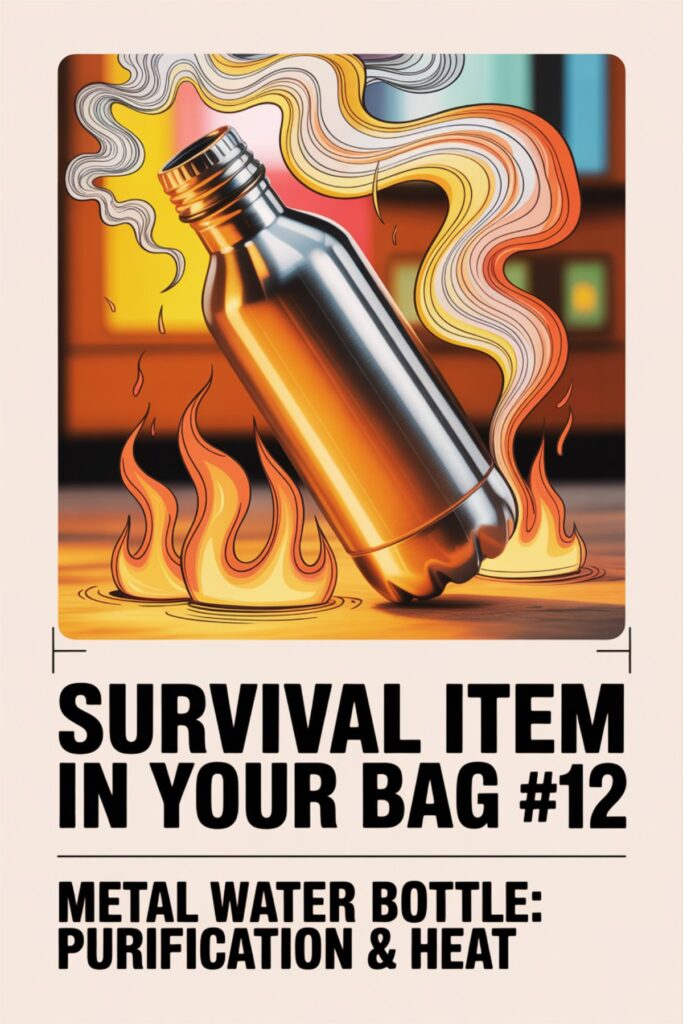
Beyond hydration, a stainless steel bottle can:
- Boil water over a fire to purify it.
- Bang it against a hard surface to signal your location.
- Filled with hot water and wrapped in a spare sock, it becomes an emergency heat pack for someone showing signs of hypothermia.
- Used by the strap, it’s a self-defense tool.
If you’re building a smart survival bag from your everyday carry, a double-walled stainless steel bottle is non-negotiable.
13. A Credit Card or Loyalty Card You Don’t Use
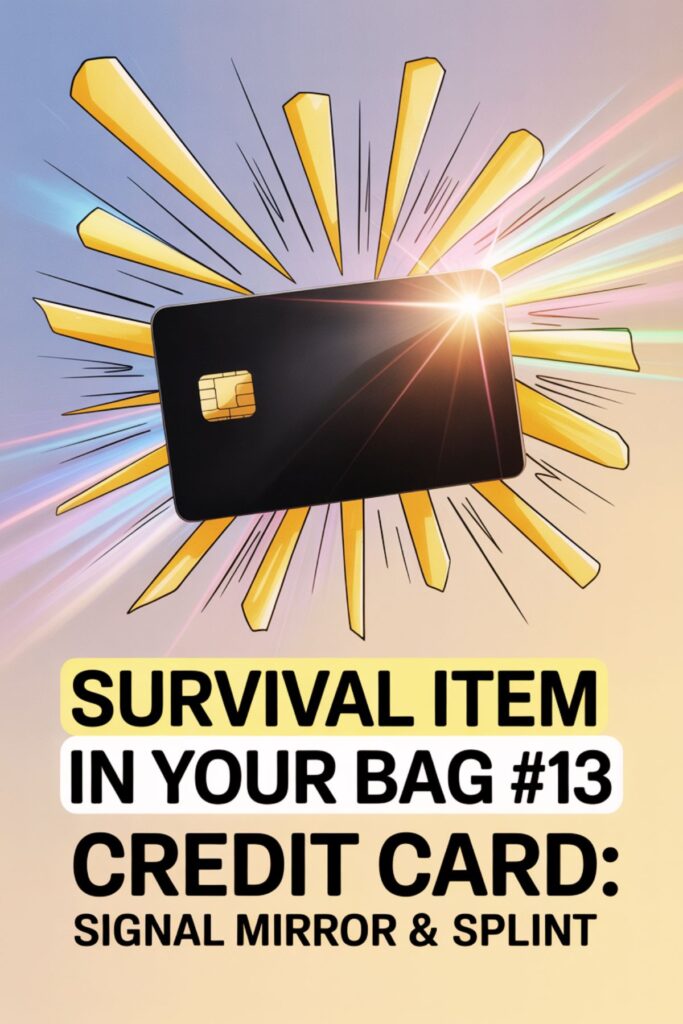
Pick the most expired, least important card in your wallet and designate it your survival card. Here’s why it earns its place:
- Use the edge to scrape a bee stinger out of skin; never use tweezers, which squeeze and release more venom
- Wedge it under a splinter for controlled leverage
- Improvise a small splint support for a broken finger
- Angle the shiny side toward sunlight to signal a passing vehicle or aircraft; it’s visible from a genuinely surprising distance
You already own five of these. One of them should now have a job.
14. Safety Pins
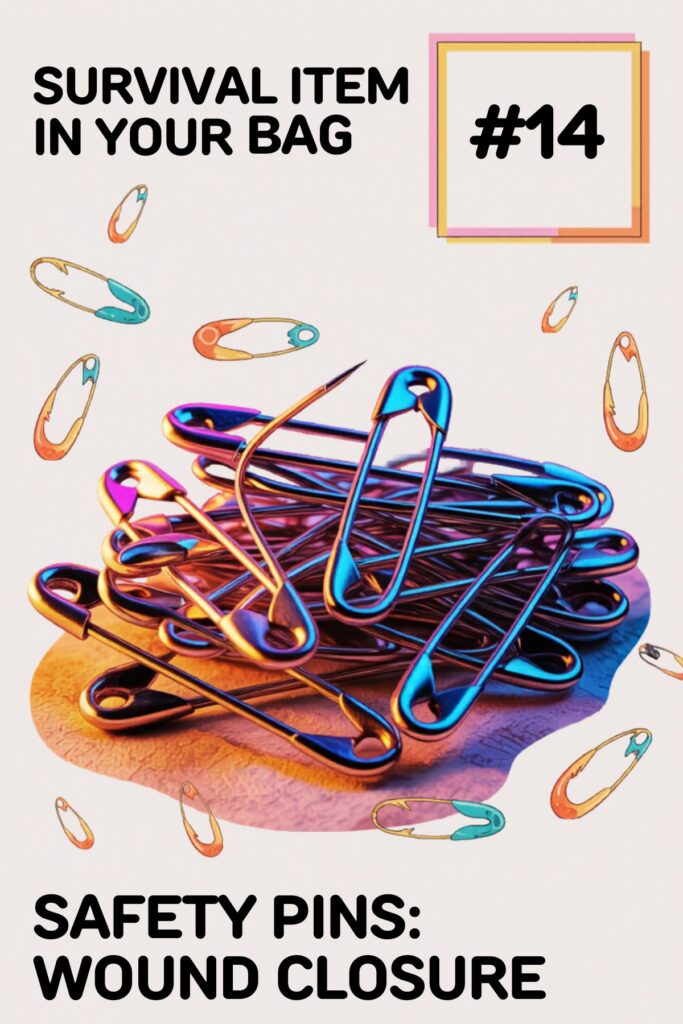
Old-school. Underrated. A few safety pins tucked into an interior pocket cover a lot of ground:
- Close a wound as a makeshift butterfly stitch by pulling skin edges together and pinning across
- Drain a blister cleanly without tearing surrounding skin
- Remove a tick by sliding under it at the base without squeezing the body
- Pin a broken bag strap, a sling, or a splint in place
These cost nothing. They weigh nothing. There is no reason not to have three of them in your bag right now.
15. A Portable Phone Charger
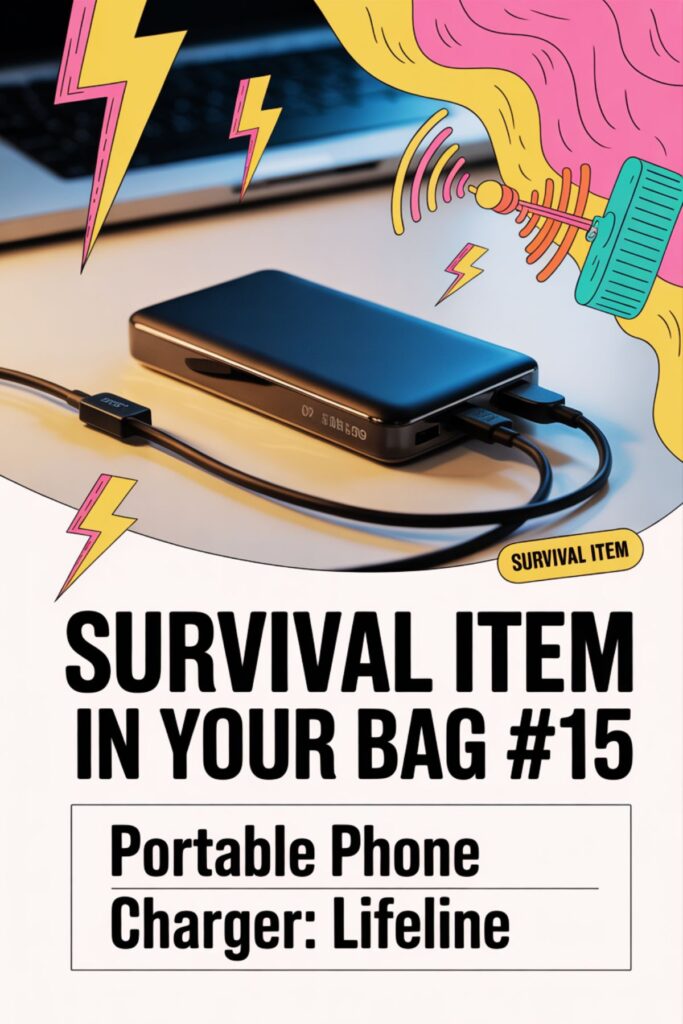
This one feels obvious until you think about what a dead phone actually means in a real emergency. No 911. No GPS. No way to send your location. No translation if you’re abroad. No flashlight. Nothing. A dead phone in a genuine emergency is not an inconvenience; it’s a critical failure point.
A slim charger like the Anker PowerCore 10000 holds about three full charges and fits in a jacket pocket. Keep it in your bag. Keep it charged. This is the simplest, most impactful survival tool on this entire list.
Build Your Survival Kit
If you want to go beyond what’s already in your bag and build a proper everyday survival pack without looking like you’re preparing for the apocalypse, these are the additions that make the biggest difference:
- Mini first aid kit (the flat ones that slip into any bag)
- Mylar emergency blanket (folds to the size of a credit card, reflects 90% of body heat)
- Mini multi-tool keychain
- Waterproof matches
- Travel dental floss
- Paracord bracelet (wear it, use it when you need it)
None of these are bulky. All of them are the difference between someone who freezes and someone who handles it.
More Survival Life Hacks
These survival skills and techniques posts are worth saving now so you actually have them when you need them:
- What to do when you’re lost in the forest with no signal and no plan
- One plastic bag, 15 survival hacks you’ll wish you knew sooner
- Winter life hacks that could literally save your life
Save this pin!