Old School Home Remedies for Acne
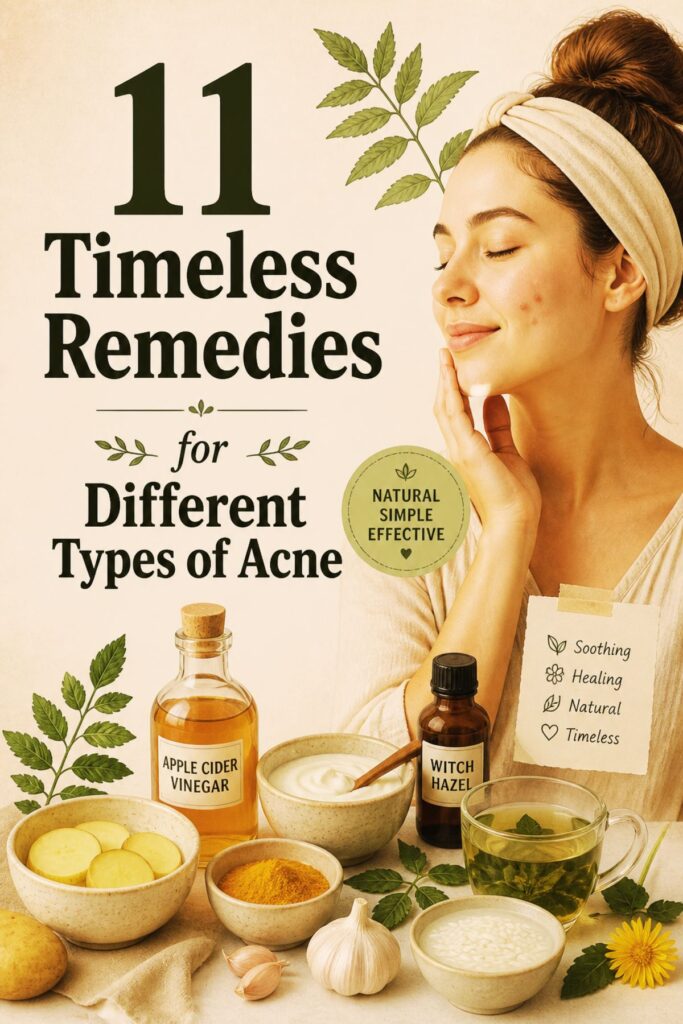
The best home remedies for acne were figured out centuries before Instagram skincare girlies made it a whole personality. And a lot of what your grandma or that one aunt with impossibly clear skin was doing? Science is finally catching up and saying yeah, actually, that works.
This post is about how to get rid of acne the old-school way; no 12-step routine, no $80 serum, no dermatologist waitlist.
These work on hormonal acne, back acne, cystic acne, forehead acne, fungal acne, stubborn acne marks, and everything in between.
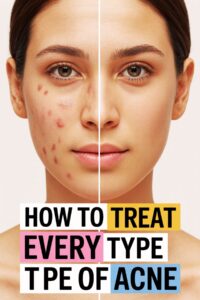
And if you are not sure what type of acne you have (like… cystic what?… fungal??) make sure to check out my post about types of acne to be able to identify yours first.
The Raw Potato Trick for Acne (Seriously, Keep Reading)
Nobody talks about this one and it genuinely should be famous.
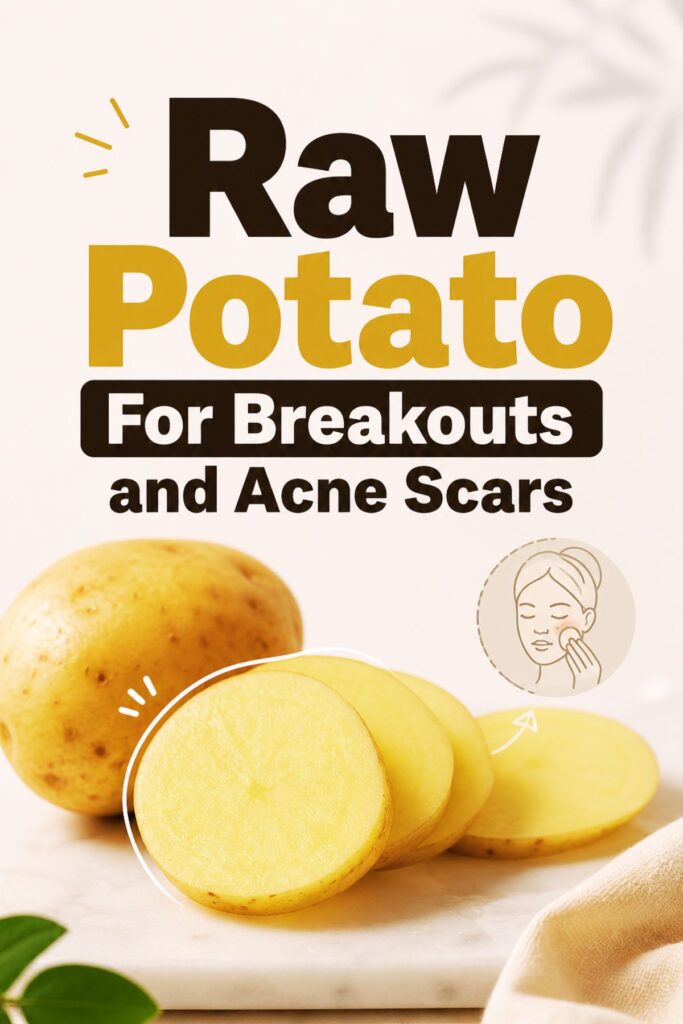
Raw potato contains an enzyme that lightens dark spots and calms inflammation. It’s been used in Eastern European folk medicine for generations for active breakouts and acne scar removal.
It works on both; the pimple that showed up today and the dark spot it left behind last month.
Here’s exactly what to do:
- Slice a raw potato that has been sitting in the fridge (cold = bonus anti-redness effect)
- Rub the cut side directly onto active breakouts or acne marks in slow circles for 2 minutes
- Leave the residue on for 10 minutes, then rinse with cool water
- Do this every single night for 2 weeks
The results on post-acne dark spots are genuinely surprising. This is not a “you might notice a difference” situation. This is a “wait, did that actually work?” situation.
Neem: The Ancient Weapon Your Skin Has Been Waiting For
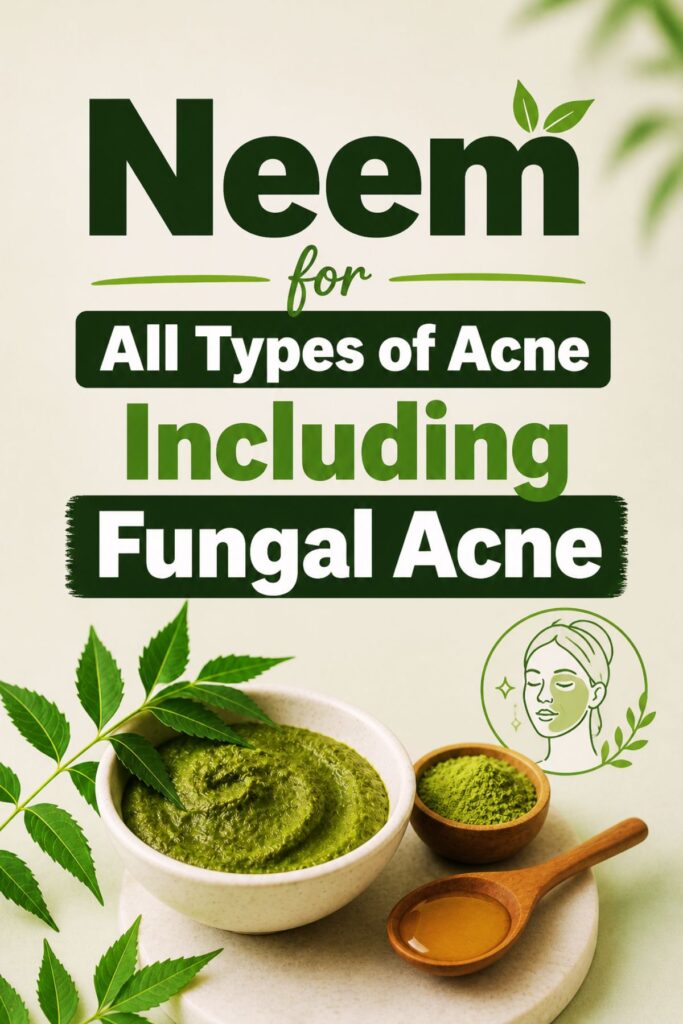
Neem has been used in Ayurvedic medicine for thousands of years and it is, without exaggeration, one of the most powerful natural acne remedies that exists. Antibacterial. Antifungal. Anti-inflammatory.
It works on all types of acne; your regular whiteheads and blackheads, hormonal breakouts, inflamed pimples, and yes, even cystic acne.
But it has one particular superpower that almost nothing else has: it’s one of the very few natural options that actually works on fungal acne; those small, uniform, frustrating little bumps that often show up on the forehead or chest and refuse to respond to anything because they’re caused by yeast, not bacteria.
If you’ve been treating forehead acne for months with zero results, there’s a real chance it’s fungal and neem is your answer. (Not sure what type you’re dealing with? This breakdown of 6 types of acne and how to get rid of acne for good will tell you immediately.)
The neem paste mask (works for all acne types):
- 1 tsp dried neem powder
- 1 tsp raw honey
- A few drops of water; mix into a paste
- Apply to face or any affected area (yes, including your back)
- Leave for 15 minutes, rinse with lukewarm water
- Use 2-3x per week
For deep cystic acne or hormonal breakouts around the chin specifically, neem oil diluted in jojoba oil (2-3 drops per teaspoon of jojoba) works as a targeted spot treatment on top of the mask routine. You can find neem powder here for next to nothing.
Rice Water: The Toner That Predates Every Toner
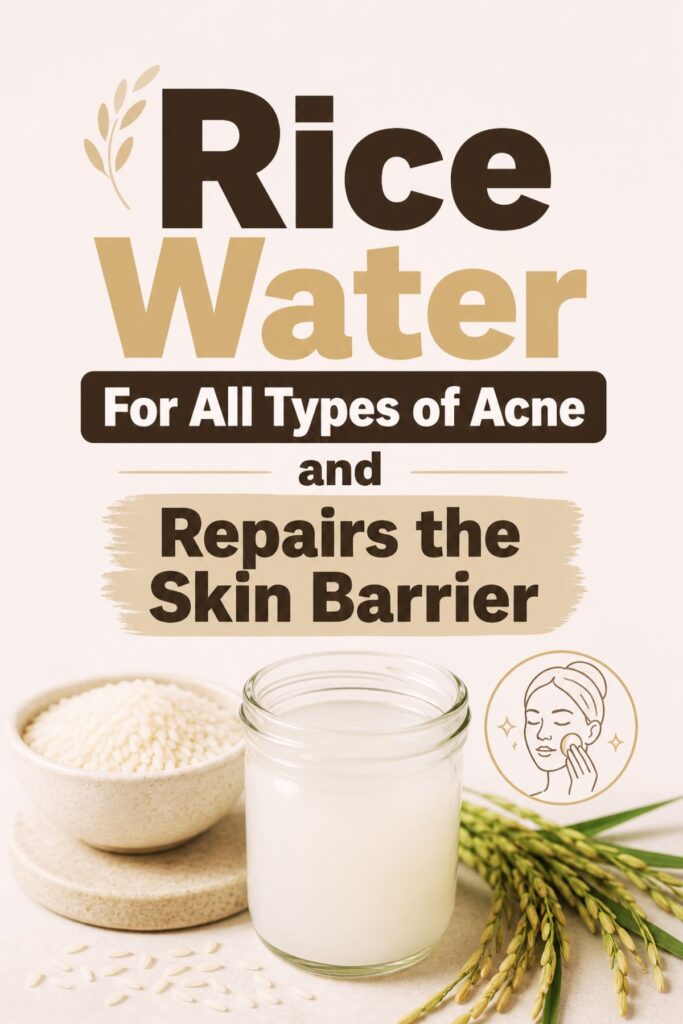
Before the rice face mask for acne trend exploded online, Korean and Japanese women had been using rice water as a daily skin rinse for centuries.
It works on all acne types; it reduces inflammation, controls oil, and gently clears congested pores.
But it has one extra layer that makes it especially powerful for acne prone skin: it contains a compound that repairs the skin barrier.
And a damaged skin barrier is one of the most overlooked reasons breakouts keep coming back regardless of what you put on your face.
You treat the pimple; you never fix the barrier; you get another pimple.
Rice water quietly works on both the active breakout and the root cause at the same time.
Make it:
- Rinse ½ cup of plain white rice
- Soak in 2 cups of water for 30 minutes
- Strain into a glass jar, store in the fridge for up to 4 days
Use it:
- Apply with a cotton pad after cleansing, like a toner
- Or soak a clean cloth in it and press it to your face for 5 minutes as a compress
- For back acne and chest acne, pour into a spray bottle and spritz on after showering, let it dry naturally
Garlic for Acne: Unglamorous, Effective, Non-Negotiable
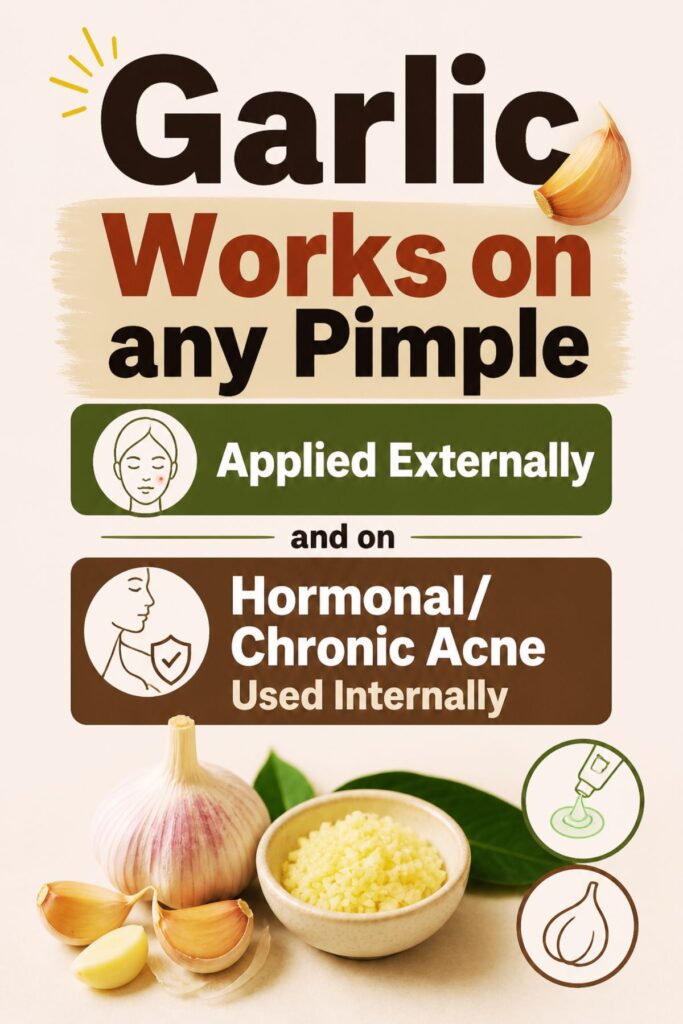
Raw garlic contains one of nature’s most potent antimicrobial compounds.
It destroys acne-causing bacteria, reduces swelling, and speeds up healing. Your grandma probably swore by it. She was right.
The safe topical method (because rubbing raw garlic straight on your face will burn and you will not enjoy it) works on any pimple:
- Crush 1 garlic clove and let it sit for 10 minutes; this is when the allicin activates
- Mix the crushed garlic with 1 tsp aloe vera gel
- Apply only to the pimple, not all over your face
- Leave for 10 minutes max, then rinse
And the internal method works for chronic, inflammation-driven acne; particularly effective for hormonal acne:
- 1 raw garlic clove per day, minced into food or swallowed whole with water
- Not cute. Genuinely anti-inflammatory. The effect on hormonal breakouts over 3-4 weeks is real.
Apple Cider Vinegar: You’ve Been Using It Wrong
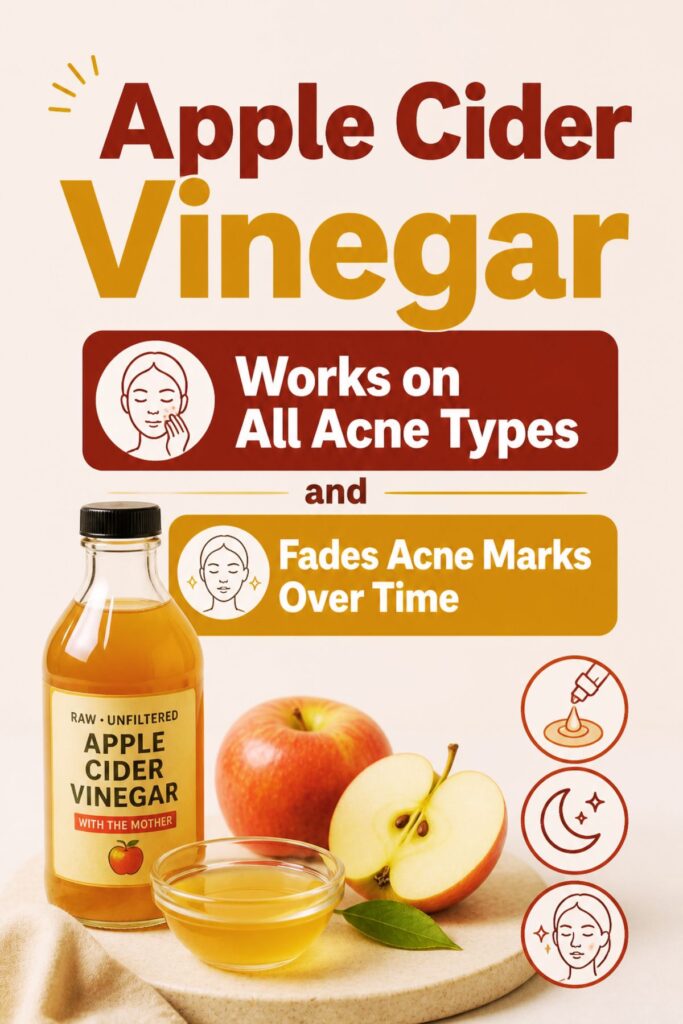
Everyone has heard of ACV for acne. Almost everyone has used it undiluted, irritated their skin, and written it off.
Actually, ACV works on all types of acne; blackheads, whiteheads, hormonal breakouts, inflamed pimples.
If it doesn’t work, the problem is actually how it was applied.
Undiluted, it strips your skin’s pH barrier and makes everything worse.
Properly diluted, it’s a legitimate acne removal home remedy that kills acne-causing bacteria and yeast, gently exfoliates naturally, and fades acne marks over time.
The correct way:
- 1 part raw, unfiltered ACV (with “the mother,” always)
- 3 parts water for oily or resilient skin
- 4-5 parts water for sensitive or combination skin
- Apply with a cotton pad after cleansing, wait 30 seconds, then moisturize
- Night use only; it increases sun sensitivity
For back acne, fill a squeeze bottle with the diluted mix, apply after your shower, wait 60 seconds, rinse.
That’s it. Consistent use over 3-4 weeks makes a visible difference on active breakouts and leftover marks alike.
Witch Hazel: The Original Toner (That’s Still Better Than Most)
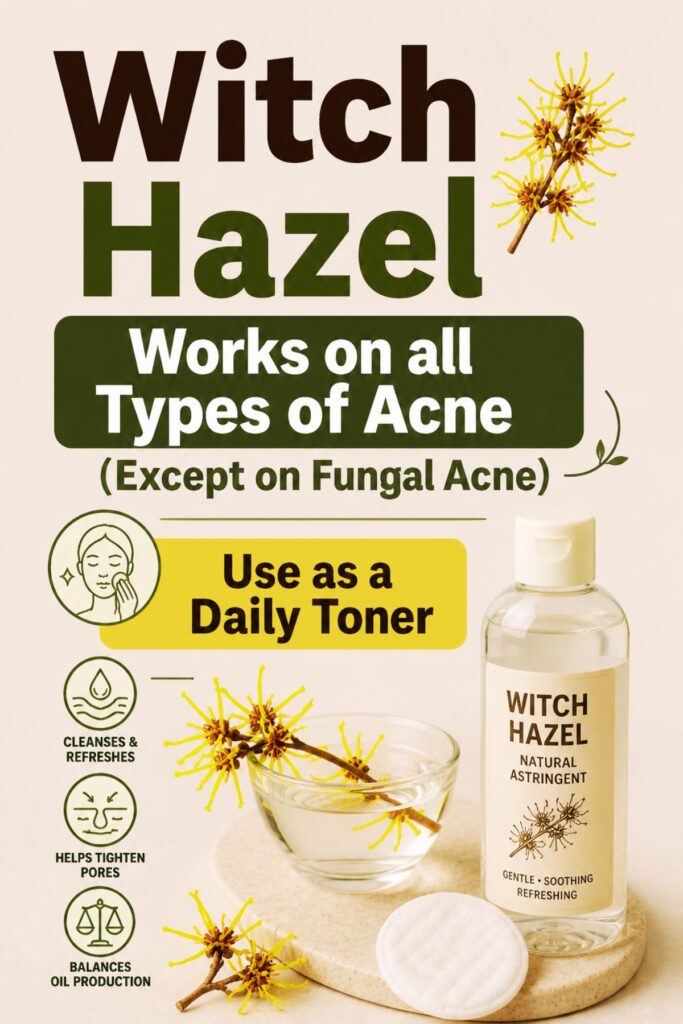
Witch hazel has been used as a skin treatment since the 1800s and it works on most types of acne; bacterial breakouts, hormonal flares, blackheads, whiteheads, and cystic acne.
The one exception is fungal acne, which needs an antifungal approach like neem or ACV instead.
For everything else, think of witch hazel as your daily baseline, the thing you use consistently while the bigger treatments do their work.
It’s a natural astringent that tightens pores, reduces excess oil, and calms redness without disrupting your skin barrier the way alcohol-based toners do. Basically, it keeps everything in check without drama
How to use it:
- After cleansing, apply witch hazel to a cotton pad and swipe across your face
- For back acne and chest acne, pour a little onto a cotton pad or cloth and pat onto affected areas after showering
- Let it dry completely before applying moisturizer
- Use morning and/or night; it’s gentle enough for daily use
- Follow with a moisturizer; skipping this step will make your skin overcompensate with more oil
It works especially well for:
- Any acne type on the face as a daily toner between bigger treatments
- Forehead acne and an oily T-zone
- Chin acne that flares with your cycle
One thing: get the alcohol-free version.
The ones with alcohol are too drying and will trigger more oil production, which is the opposite of what you want. Alcohol-free witch hazel toner is easy to find and genuinely affordable.
The Yogurt and Turmeric Mask for Acne Marks
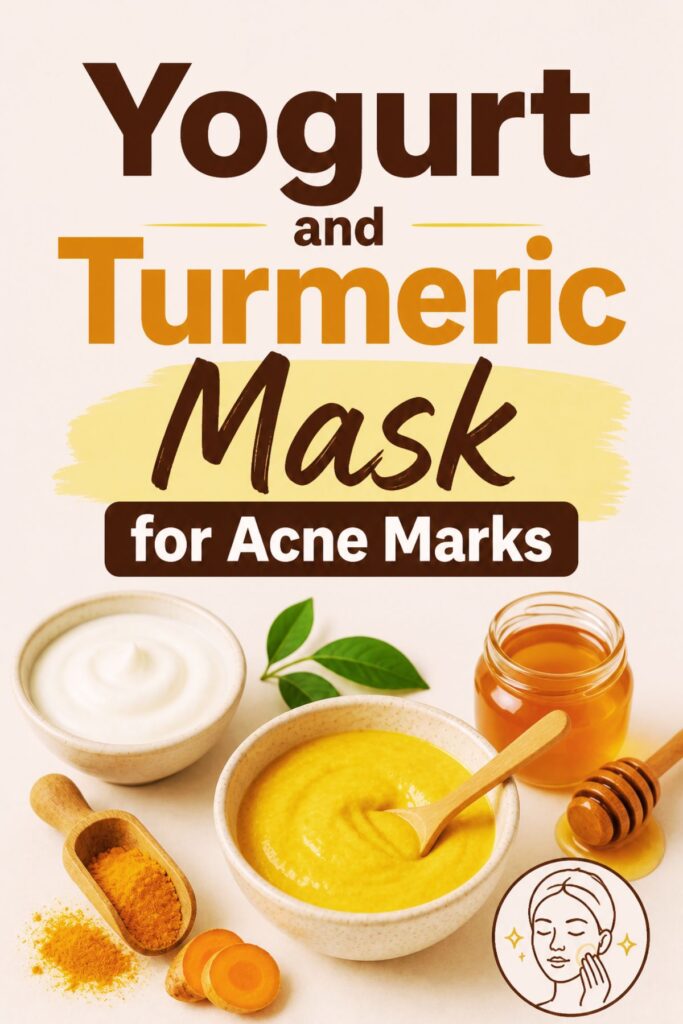
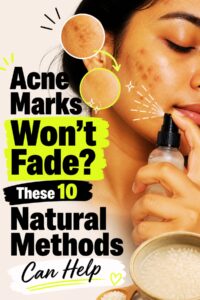
This is the one for when the pimple is gone but it left a reminder.
Turmeric has been used in Indian households as an anti-inflammatory skin treatment for generations; paired with plain yogurt, which contains lactic acid for gentle exfoliation, this mask specifically targets acne marks and acne scar fading rather than active breakouts.
Exact recipe:
- 2 tbsp plain full-fat yogurt (not Greek, not flavored; regular plain)
- ½ tsp turmeric powder (not more; you’ll stain your skin yellow temporarily if you overdo it)
- 1 tsp raw honey
- Mix, apply to face or any area with acne marks, leave for 20 minutes, rinse with warm water
Use 2-3x per week. Within a month, the difference in skin tone evenness is genuinely noticeable. If you want to boost it, swap the yogurt for the rice water from above and use turmeric + honey + rice water as your mask base.
The Ice Cube Trick: Your Emergency Pimple First Aid
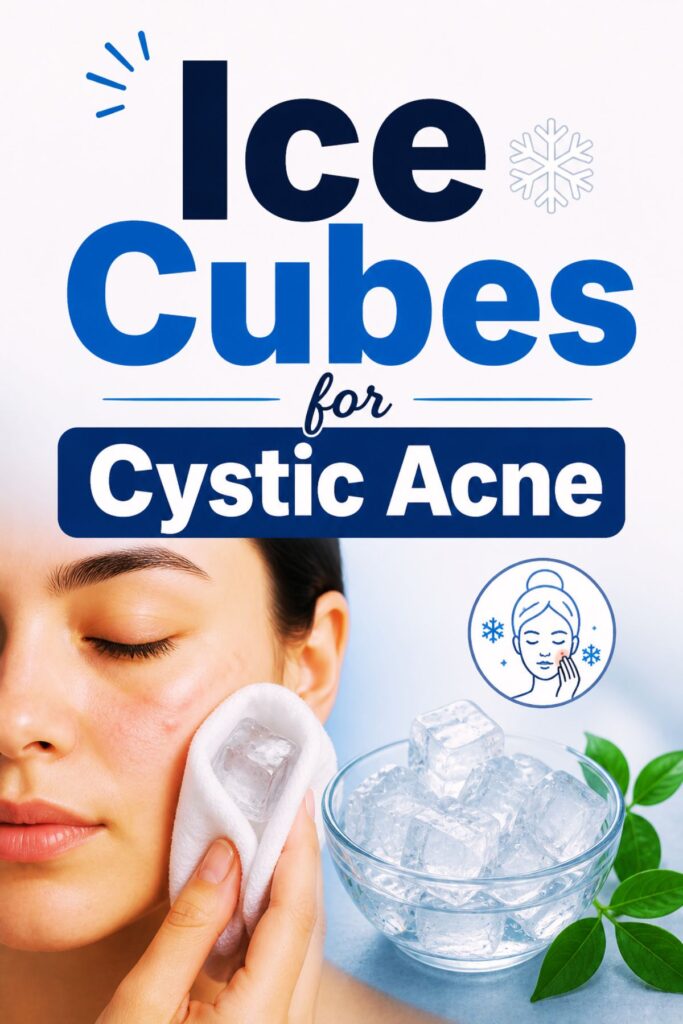
A cystic pimple shows up the night before something important 😱
You have two choices: panic, or grab ice.
Cold therapy constricts blood vessels, reduces inflammation, and brings down the size and redness of a swollen pimple faster than almost anything else you can do at home.
Do it correctly:
- Wrap an ice cube in a clean cloth; never directly on skin
- Hold on the pimple for 1 minute on, 1 minute off
- Repeat 3-4 rounds, morning and night
- Follow with your neem or tea tree spot treatment while the skin is still slightly cool
This is the most honest answer to how to get rid of acne overnight fast; it won’t cure the underlying cause, but it will make that pimple significantly smaller and less red by morning.
It’s also genuinely useful for cystic acne flares that are painful and swollen before they even come to a head.
Tea Tree Oil: The One With Actual Science Behind It
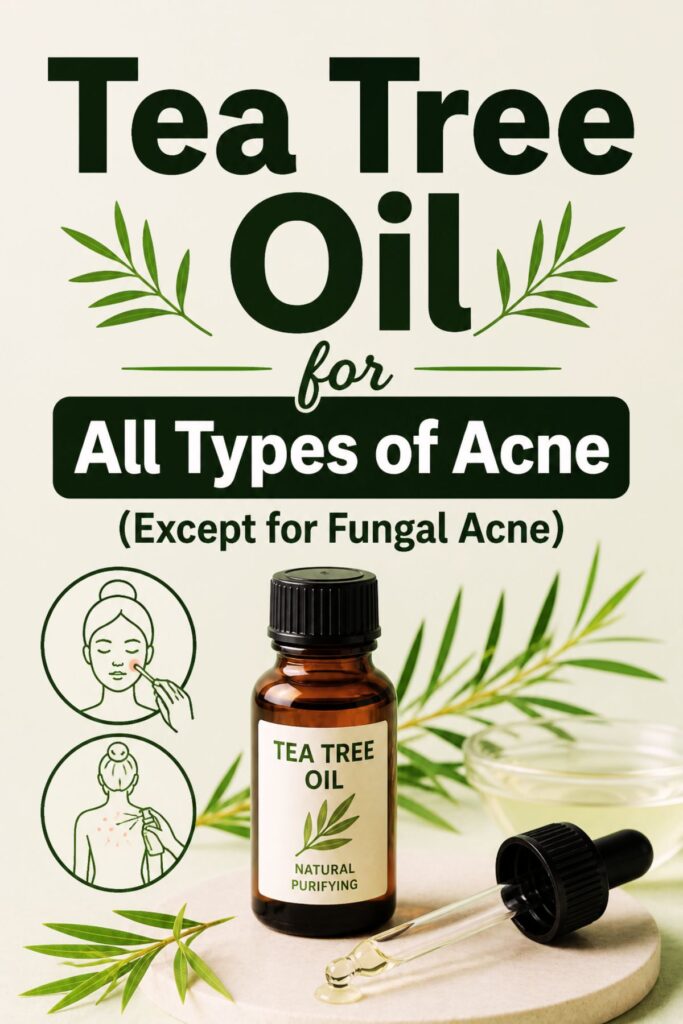
Tea tree oil for acne is the rare natural remedy that has clinical studies to back it up. Research shows it performs comparably to benzoyl peroxide for mild-to-moderate acne, with less dryness and irritation.
It works on all types of bacterial acne; whiteheads, blackheads, inflamed pimples, and cystic breakouts.
Like witch hazel, it won’t touch fungal acne since that needs an antifungal approach, but for everything else it’s one of the most reliable spot treatments in this entire list. It’s antibacterial, anti-inflammatory, and it works.
The rule that changes everything: always dilute it.
Spot treatment:
- 2-3 drops tea tree oil + 1 tsp jojoba or argan oil
- Apply only to the pimple with a clean cotton swab
- Leave overnight, rinse in the morning
For back acne and body acne:
- 10-15 drops of tea tree oil in a small spray bottle filled with water
- Shake, spritz on after showering, pat dry; don’t rub
- Do this every day consistently for at least 3 weeks before judging results
A good tea tree oil is inexpensive and will last you months.
What You Eat: The Old-School Acne Diet Advice That’s Coming Back
Before skincare products existed, skin was treated from the inside.
And while the modern world got distracted by topical treatments, traditional medicine never stopped connecting gut health, hormones, and skin. Here’s what that actually looks like in practice:
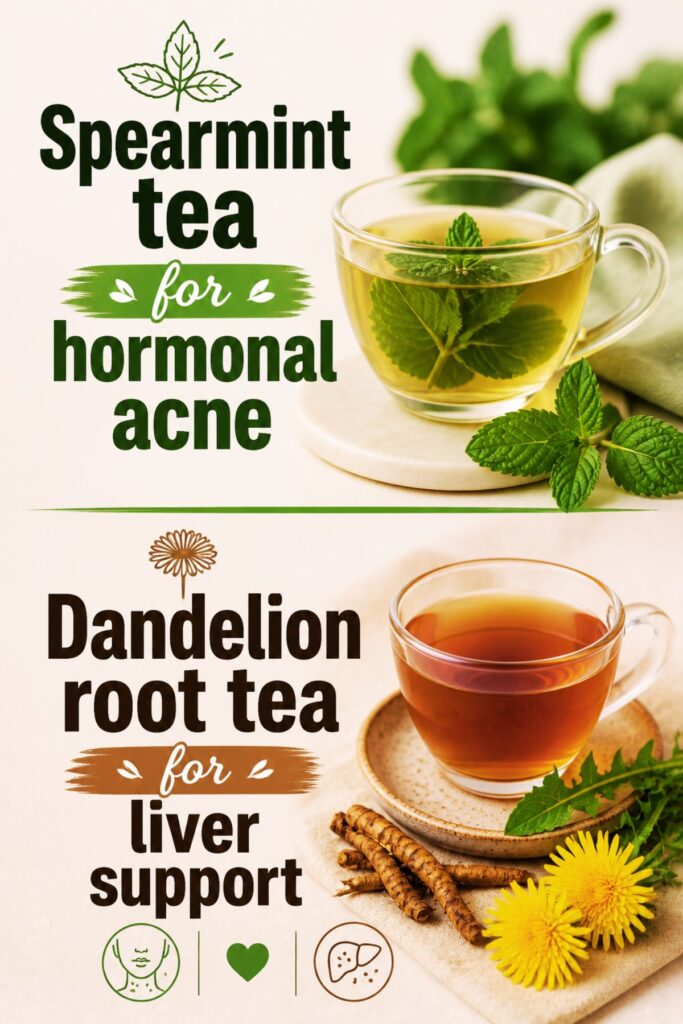
Spearmint tea for hormonal acne:
Two cups a day. Studies show spearmint reduces androgens, the hormones responsible for excess oil production and the kind of deep, painful chin acne and jawline breakouts that show up like clockwork with your cycle. This is one of the most specific, evidence-backed items on this entire list. Brew it fresh, drink it consistently for 4-6 weeks, and notice what happens to your hormonal acne.
Dandelion root tea for liver support:
One cup daily. Old-school herbalists prescribed this for skin for a reason; the liver processes excess estrogen, and when it’s sluggish, that estrogen recirculates and shows up on your skin. Dandelion root supports liver function and has been used in folk medicine across Europe and North America specifically for acne and skin clarity. It tastes like mild, earthy tea. You’ll find it at any health food store or here online.
The two dietary changes that matter most:
- Cut high-glycemic foods (white bread, sugary drinks, processed snacks); they spike insulin, which spikes androgens, which trigger oil production
- Reduce dairy, particularly skim milk; the research connecting dairy to hormonal acne is consistent and has been replicated multiple times
This is the core of any effective hormonal acne diet and anti-acne diet, and it’s not new at all. It’s just the advice that gets buried under product recommendations.
If your acne face map shows consistent breakouts in the same zones (always the chin, always the forehead, always the cheeks), that’s your body pointing to something internal.
The acne face map is worth taking seriously, not as a perfect diagnostic tool, but as a starting point for figuring out what’s going on beneath the surface.
Back Acne and Body Acne: The Specific Game Plan
Back acne and body acne deserve their own moment because they don’t always respond to the same methods as face acne. A few things work especially well here:
- ACV rinse: Diluted 1:4 in a squeeze bottle, applied after washing in the shower, left for 60 seconds, rinsed off
- Tea tree spray: As described above; do it every day after showering
- Neem oil in body lotion: 3-4 drops mixed into fragrance-free body lotion, applied to affected areas
- Laundry detergent: This one is underrated as a cause. Fragrance and optical brighteners in regular detergent are a wildly common trigger for both back acne and chest acne that people spend years treating topically while never changing the actual cause. Switch to fragrance-free, dye-free detergent for 4 weeks and see what happens.
- Shower order matters: Rinse shampoo and conditioner completely off your back before getting out; residue from hair products is a very common but rarely-discussed cause of back acne
For a deeper dive into how to get rid of back acne based on the specific type you’re dealing with, the types of acne guide will stop you from treating fungal body acne with antibacterial methods that simply won’t work on it.
More Acne Natural Remedies
If solving things the natural, old-school way is your thing, there’s a lot more to explore. These posts go just as deep with the same no-fluff approach:
- 6 Types of Acne and How to Get Rid of Acne for Good
- How to Remove Acne Marks Naturally (These Flat Dark Spots Don’t Stand a Chance)
- How to Remove The Textured Acne Scars Naturally
- Which Oil Should You Be Oil Pulling With? (Based on Your Problem) and it includes one for acne.
Save this pin!