6 Types of Acne and How to Get Rid of Acne for Good
You’ve tried the spot treatments, the face washes, the “drink more water” advice — and yet here you are, still searching for types of acne at midnight wondering why nothing sticks.
Here’s the thing: how to get rid of acne depends almost entirely on which kind you actually have, and most people are treating the wrong thing with the wrong products on repeat.
This post is your decoder ring: what each type means, why it keeps showing up where it does, and exactly what to do about it.
After learning which type of acne you have, make sure to check out my post about home remedies for acne (depending on your type), if you want to treat yours naturally.
Read Your Face Like a Map
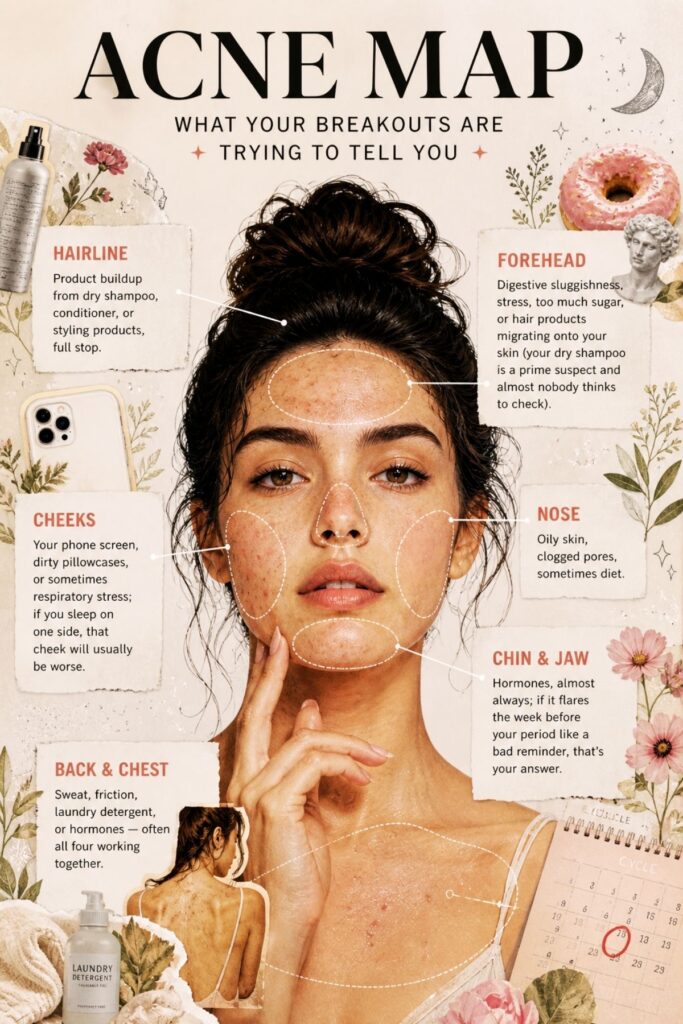
Before anything else, location matters. Acne face mapping is an old practice rooted in Ayurveda and Traditional Chinese Medicine, and while it’s not a hard science, it’s a genuinely useful starting point. Think of your face as a map your body is filling in for you.
Here’s what your acne placement might be telling you:
- Forehead: Digestive sluggishness, stress, too much sugar, or hair products migrating onto your skin (your dry shampoo is a prime suspect and almost nobody thinks to check)
- Cheeks: Your phone screen, dirty pillowcases, or sometimes respiratory stress; if you sleep on one side, that cheek will usually be worse
- Chin and jaw: Hormones, almost always; if it flares the week before your period like a bad reminder, that’s your answer
- Nose: Oily skin, clogged pores, sometimes diet
- Back and chest: Sweat, friction, laundry detergent, or hormones — often all four working together
- Hairline: Product buildup from dry shampoo, conditioner, or styling products, full stop
Keep this in mind as you read below. Where your breakouts live tells you almost as much as what they look like.
The Types of Acne (And What Each One Actually Needs)
1. The Sneaky Cloggers: Blackheads and Whiteheads
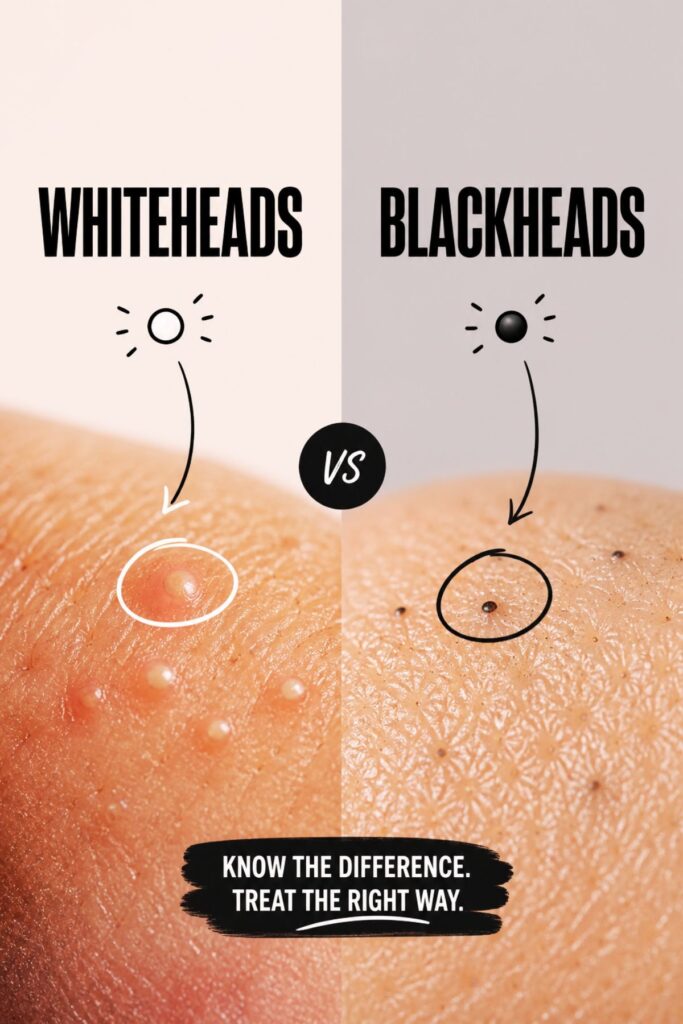
These are the quiet, non-angry kind. No throbbing, no redness, just texture and congestion that never seems to fully go away.
- Whiteheads are small bumps with a white or flesh-colored top; the pore is blocked and sealed
- Blackheads are dark little dots where the pore is open and the buildup inside has darkened from air exposure; it is not dirt, and scrubbing does absolutely nothing useful
What’s causing them: Excess oil, dead skin that isn’t turning over fast enough, heavy or pore-clogging products, and sometimes dairy or high-sugar foods.
What they actually need:
- A salicylic acid cleanser used a few times a week; it works inside the pore rather than just on the surface, which is the only way to actually clear a clog
- A retinol at night to change how your skin behaves long-term; this is the one ingredient that actually retrains your pores
- Drop the scrub entirely; it spreads bacteria and irritates the skin barrier without solving anything
One thing most people never check: silicones and heavy oils in hair conditioners cause persistent whiteheads along the hairline and forehead. Flip your conditioner bottle and look for “dimethicone” near the top of the ingredient list. You may have just found the culprit you’ve been missing for years.
2. Hormonal Acne: The Monthly Uninvited Guest
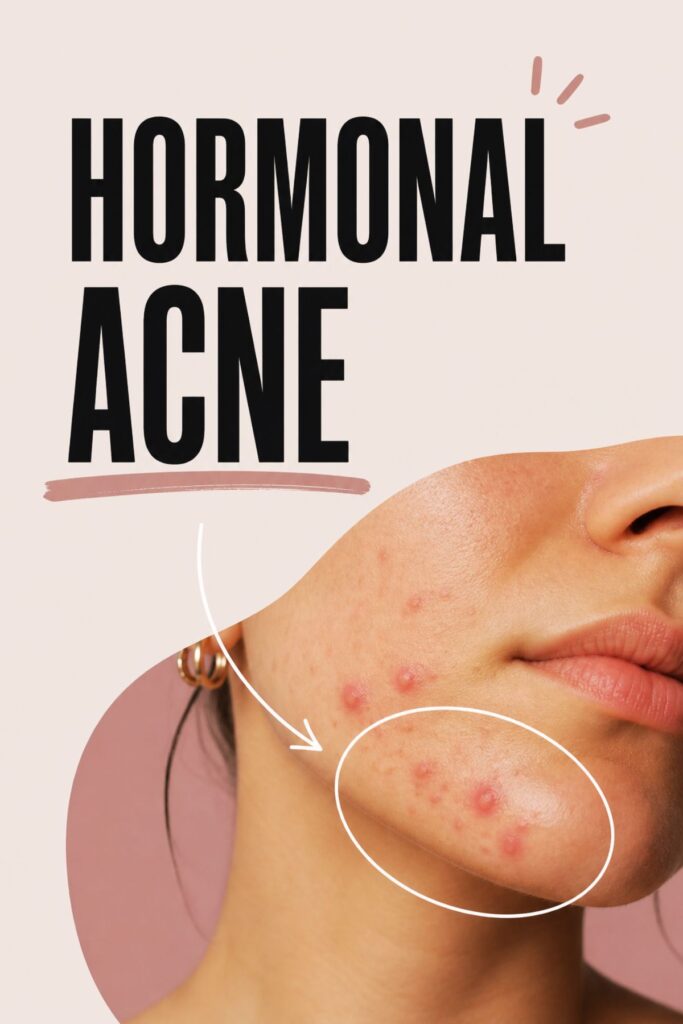
If your breakouts run on a schedule — flaring predictably before your period and then calming down — you’re dealing with hormonal acne, and no cleanser alone is going to fix it.
What it looks like:
- Deep, sore bumps or full cysts, not surface-level
- Almost always on the chin, jaw, and lower cheeks
- Shows up the same week every month
- Stubbornly resistant to everything topical you throw at it
What’s causing it: A spike in androgens before menstruation triggers excess oil production. Stress worsens it because cortisol behaves similarly to androgens in the skin. So yes, stressing about your acne can literally cause more acne. Deeply unfair.
What actually helps:
- Spearmint tea, 2 cups a day. Small studies have shown it reduces androgen levels in the body. Give it at least 6 solid weeks before you judge it; this is not an overnight fix.
- Zinc picolinate, 30mg daily with food. One of the most clinically backed supplements for acne and one of the least talked about. It works on both inflammation and oil production at the same time.
- Inositol (the myo + D-chiro combination). If you have PCOS or suspect a hormonal imbalance, this is worth researching seriously; many women see meaningful changes in their skin from it.
- Diet: Cutting refined sugar and dairy for 4-6 weeks is worth a genuine trial. The hormonal acne diet connection doesn’t apply to everyone equally, but for a lot of people it’s the missing piece.
- Your routine doesn’t need to be 10 steps: gentle cleanser, niacinamide serum in the morning, retinol at night, SPF always. Calm and consistent beats complicated every time.
3. Fungal Acne: The Imposter Your Skincare Routine Keeps Feeding
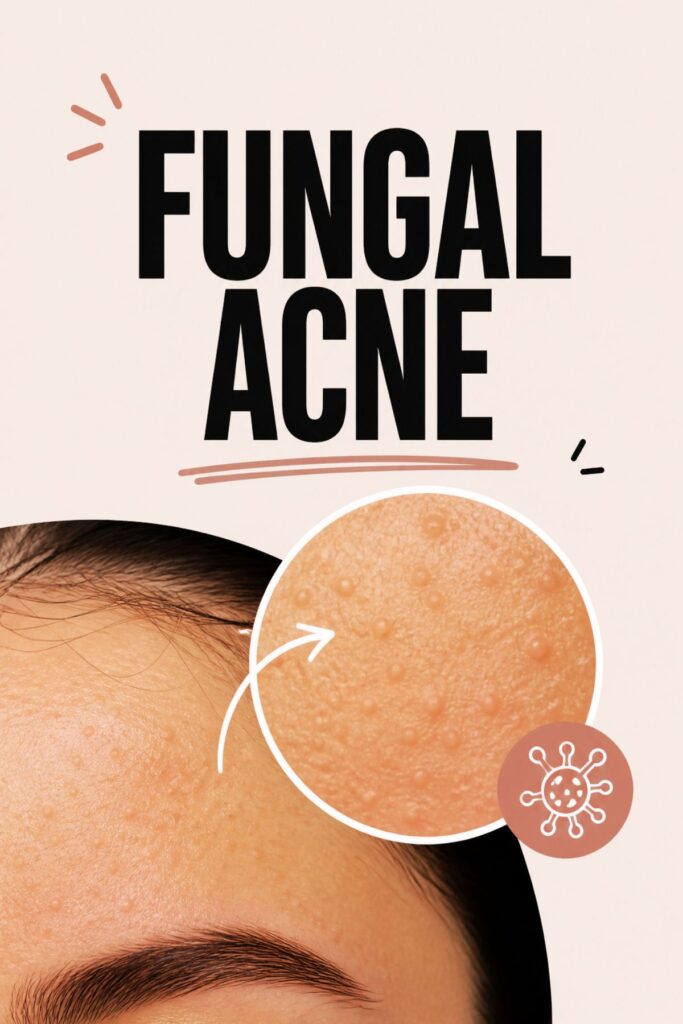
This is the type that looks exactly like regular acne but gets worse the more you treat it with conventional products. Fungal acne is not caused by bacteria at all; it’s a yeast overgrowth in the hair follicles, and treating it like regular acne is like trying to fix a Wi-Fi problem by changing a lightbulb.
Signs you might have fungal acne:
- Small, uniform bumps that are all roughly the same size; suspiciously consistent
- Itchy — this is the biggest tell; regular acne doesn’t itch
- Mostly on the forehead, chest, shoulders, or back
- Gets worse when you use rich moisturizers or facial oils
- Has not responded to anything you’ve tried for months
What causes it: Sweating, high humidity, taking antibiotics (which wipe out the bacteria that normally keep yeast in check), wearing sweaty gym clothes too long, or occlusive skincare products.
A very specific fungal acne skincare routine:
- Use Head & Shoulders Classic as a cleanser on the affected area; leave it on for 2-3 minutes before rinsing, three times a week. The pyrithione zinc in it is antifungal and this is genuinely one of the most effective simple fixes.
- Audit your moisturizer. Fungal acne feeds on certain fatty acids found in many standard moisturizers. While treating it, switch to a lightweight, fungal acne-safe formula. Search for fungal acne safe moisturizers here.
- Change out of sweaty clothes immediately after every workout, every single time.
- If it persists, ask your doctor about ketoconazole cream; it’s the targeted treatment and it works fast.
4. Cystic Acne: The Deep, Stubborn One
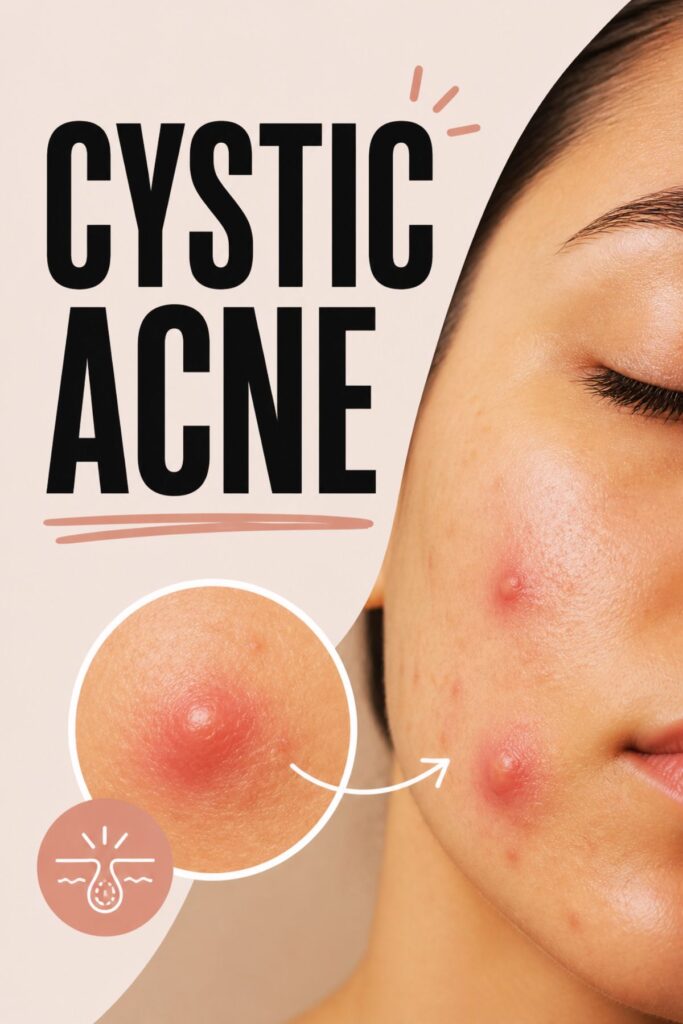
Cystic acne lives under the skin, never fully comes to a head, hurts to touch, and hangs around for weeks. It’s the most inflammatory type and the one most likely to leave marks behind if you handle it wrong.
What’s causing it: Usually a combination of genetics, hormones, and a deep inflammatory response inside the follicle. The kind of thing topicals can only partially address.
What actually helps:
- Ice it immediately. Wrap an ice cube in a clean cloth and hold it on the cyst for 1-2 minutes, several times a day. It won’t make it vanish but it visibly reduces swelling and shortens its lifespan.
- Do not squeeze it. Ever. Cysts are too deep; squeezing ruptures the follicle wall internally and turns a 10-day problem into a month-long one.
- 10% benzoyl peroxide as an overnight spot treatment applied only to the cyst itself, not your whole face
- Hydrocolloid acne patches are excellent but save them for the right moment — when and if the cyst comes to a surface head. They do nothing for a deep cyst. Find acne patches here.
- A cortisone injection from your dermatologist if timing matters. One injection, 24-48 hours, dramatically reduced. If you’ve never done it and you have a big event coming, it’s genuinely worth a call.
5. Back and Body Acne: The One You Can’t See
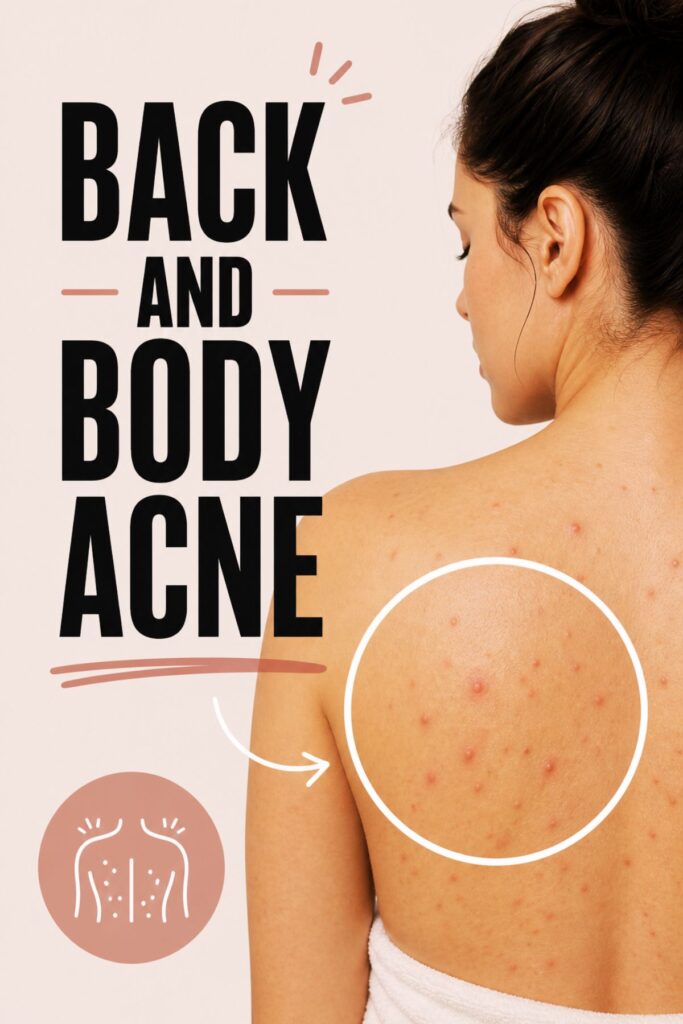
Back acne is incredibly common and also one of the most fixable types once you identify the environmental trigger — which is usually something you’ve never thought to question.
What’s usually causing it:
- Not showering soon enough after sweating
- Fragranced laundry detergent or fabric softener (switch to fragrance-free and give it a few weeks)
- Backpack straps, tight bra straps, or synthetic fabrics creating constant friction
- Conditioner running down your back during your shower and not being fully rinsed off
- Hormones, especially for upper back breakouts
Back acne remedies that work:
- Shower immediately after sweating; if you can’t, at minimum change your top
- Use a salicylic acid body wash and let it sit for 30 seconds before rinsing. Find one here.
- Rinse your hair last in the shower every time
- A spray-on salicylic acid or benzoyl peroxide makes treating your own back actually possible without a contortionist degree
- Tea tree oil diluted in aloe vera gel applied to the back is a solid daily maintenance tool while you chase down the root trigger; it won’t fix everything but it keeps things calmer
The same logic applies to chest acne — sweat, friction, and product residue are usually the main drivers, and the same body wash routine applies.
6. Forehead Acne: The Stress Crown
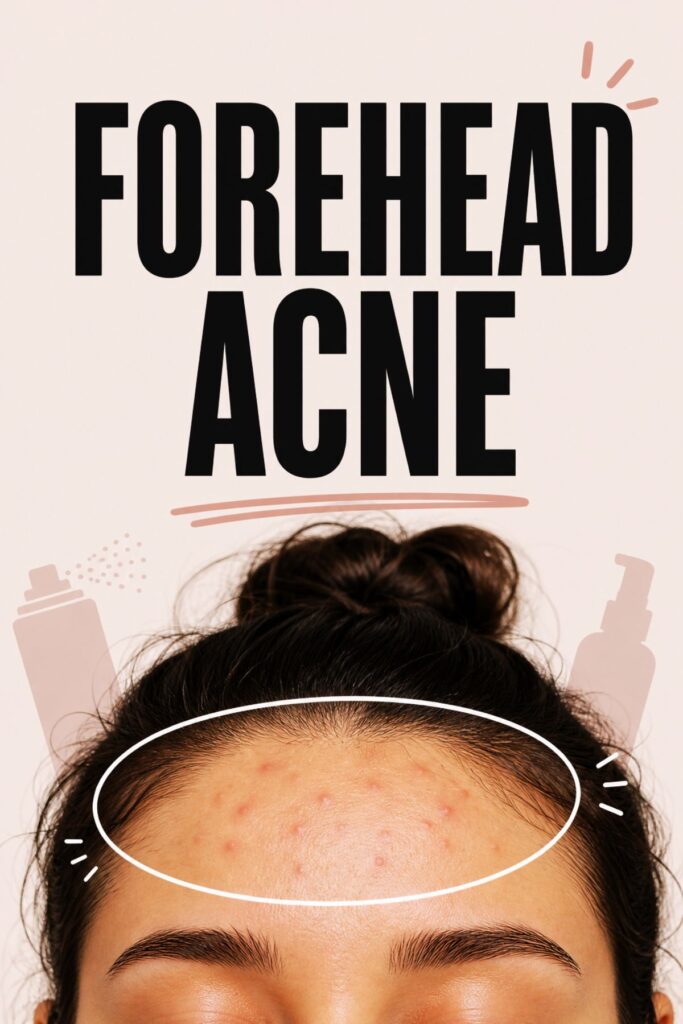
Forehead acne is almost always hair products, stress, or both working together, and most people never figure this out because the connection isn’t obvious.
- Dry shampoo and styling products that drift onto the forehead are the number one underdiagnosed cause of persistent hairline breakouts
- Hats, headbands, and bangs trap sweat and friction against the skin all day long
- Stress spikes oil production in this zone specifically, which is why a hard week at work shows up on your forehead before anywhere else
How to get rid of forehead acne:
- Run a two-week experiment with zero hair product near your hairline; just observe what happens
- Niacinamide serum morning and evening regulates oil and calms inflammation; you’ll notice a real difference within a few weeks
- Gentle exfoliation twice a week with a lactic acid toner is softer and better suited to this area than salicylic
- Wash your hat liner or headband regularly; it sounds obvious but most people genuinely never do it
And chin acne specifically: if it’s showing up right on the chin more than the jaw, it can also be linked to digestive issues or even the way you rest your hand on your face while working. Both worth checking.
A Universal Toolkit: Three Remedies That Help Across Most Types
No matter which type of acne you’re dealing with, these three things are worth adding to whatever you’re already doing. Think of them as supporting cast rather than the main fix.
1. The Rice Water Mask
This is an old Korean and Japanese beauty staple that most people in the West have never tried, and it works surprisingly well as a weekly treatment for almost every type of acne.
How to make it:
- Rinse ½ cup of white rice briefly, then soak in 2 cups of water for 30 minutes
- Strain and store the water in a sealed jar in the fridge (lasts up to a week)
- Soak a cotton pad, press it onto clean skin, and leave for 15-20 minutes
- Rinse and follow with moisturizer
For more punch, mix the rice water with 1 teaspoon of raw honey and ½ teaspoon of turmeric before applying. Honey is antimicrobial; turmeric is anti-inflammatory. The combination calms active breakouts and brightens the skin at the same time. Use 3x a week.
2. Tea Tree Oil as a Spot Treatment
Tea tree oil for acne has genuine antimicrobial and anti-inflammatory properties, and it’s one of the few natural remedies with real research behind it. Always dilute it: 1-2 drops in a teaspoon of aloe vera gel or a fragrance-free moisturizer, applied only to spots. Undiluted tea tree oil directly on skin will irritate it.
3. Garlic (Internally and Topically)
Garlic contains allicin, which has documented antimicrobial effects. Internally, adding 2-3 raw cloves to your food daily contributes to an anti-inflammatory acne diet in a way that’s low-effort and consistent. As a spot treatment, crush a clove, let it sit for 10 minutes to activate, mix with raw honey as a buffer, and apply to individual spots for 10-15 minutes max. Do not apply raw garlic directly to skin without diluting it; it will burn.
When Your Skin Is Telling You Something Deeper
Persistent, treatment-resistant acne — especially hormonal or cystic — can sometimes signal something happening internally: thyroid imbalance, insulin resistance, PCOS, or gut dysbiosis. If you’ve been consistent with a good routine for 3 months and your skin hasn’t budged, it’s worth getting bloodwork. Ask specifically for testosterone, DHEA-S, fasting insulin, and thyroid panels.
Your skin doesn’t exist separately from the rest of your body. Just like unexplained hair loss can point to something internal your body is trying to flag, stubborn breakouts that don’t respond to topicals are worth listening to rather than just treating the surface. And if you’ve noticed other things your body seems to be communicating through your hair or skin, it might all be part of the same picture.
More About Getting Rid of Acne With Home Remedies
If you’re into solving things from the inside out and without a prescription every time, there’s a lot more to explore here:
- Old School Home Remedies for Acne
- How to Remove The Textured Acne Scars Naturally
- How to Remove Acne Marks Naturally (These Flat Dark Spots Don’t Stand a Chance)
- Which Oil Should You Be Oil Pulling With? (Based on Your Problem) and it includes one for acne.
Save this pin!